
Salt loving bacteria help plants in salty soils
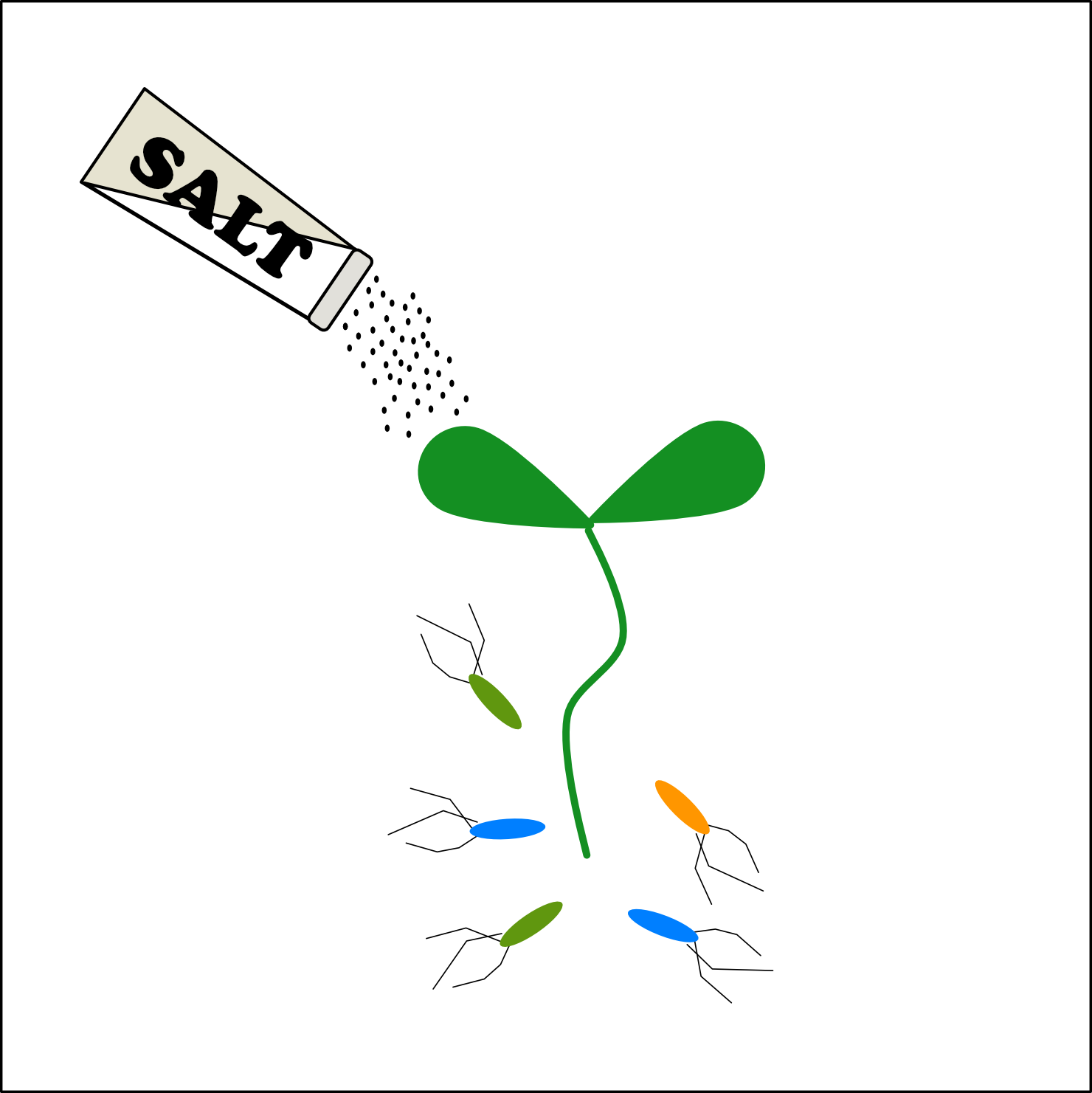
Crops growing on salty soil do less well than their on none salty soil growing counterparts. And this is a problem, as salinity affects huge swatches of soil all over the world. Now a group of Indian researchers decided to find out if salt loving bacteria could help plants grow on salty soils.
One way of making crops more salt resistance is to breed for this. Time and time again selecting for traits that improve a plant’s survival in salty soils. As you can imagen, this is a time-consuming task. And as such can take many years.
Alternatively, you can rein in the help of microbes. It is known that microorganisms can produce growth promoting compounds, and in this way can act as biofertilizers. But just as plants have their preferred environment, microbes do too. So, for salty soils the challenge is to find microorganisms that do both.
Finding salt loving bacteria
The Indian researchers were up for that challenge. They travelled to the Marakkanam salt pan on the east coast of India and took some soils samples. Back in their lab they isolated the bacteria present and selected six unique looking bacteria strains for further characterization. Genetic analysis confirmed that they were dealing with six different bacteria species.
All strains grew happily on 15% salt containing medium. But more importantly, all strains were producing the growth hormone auxin. Some of the strains could produce ammonium, or solubilize potassium, both important minerals that plants obtain via the soil.
The next question was, is this enough to help plants grow better in salty soils. For this the researchers grew spinach in salty soil, with and without the isolated bacteria. As a control the researchers had also spinach plants growing on normal soil, and on salty soil with a commercial biofertilizer.
Spinach grows better with salt loving bacteria
The first thing the researchers noticed was that plants, growing with one of the salt loving bacteria, grew much better on salty soils than any of the controls. They grew even better than the control on normal soils.
Further analysis, suggest that this most likely is due to the fact that the salt loving bacteria also provide the plants with osmolytes. These compounds help the plants to keep the cell turgor, or pressure, and protein stability in salty conditions.
This analysis is just a first step towards using salt loving bacteria as biofertilizers for crops growing in salty soils. Like the authors say, field experiments are needed to validate these preliminary findings are just as much needed as further analysis about how these salt loving bacteria stimulate plant growth in salty environments.
Literature
Raphael, D., Parthasarathi, T. Enhancing salinity tolerance and growth of Spinacia oleracea L. using halophilic plant growth-promoting bacteria. Sci Rep (2026). https://doi.org/10.1038/s41598-025-34907-2
 Plant en Zo