
Stomata done differently
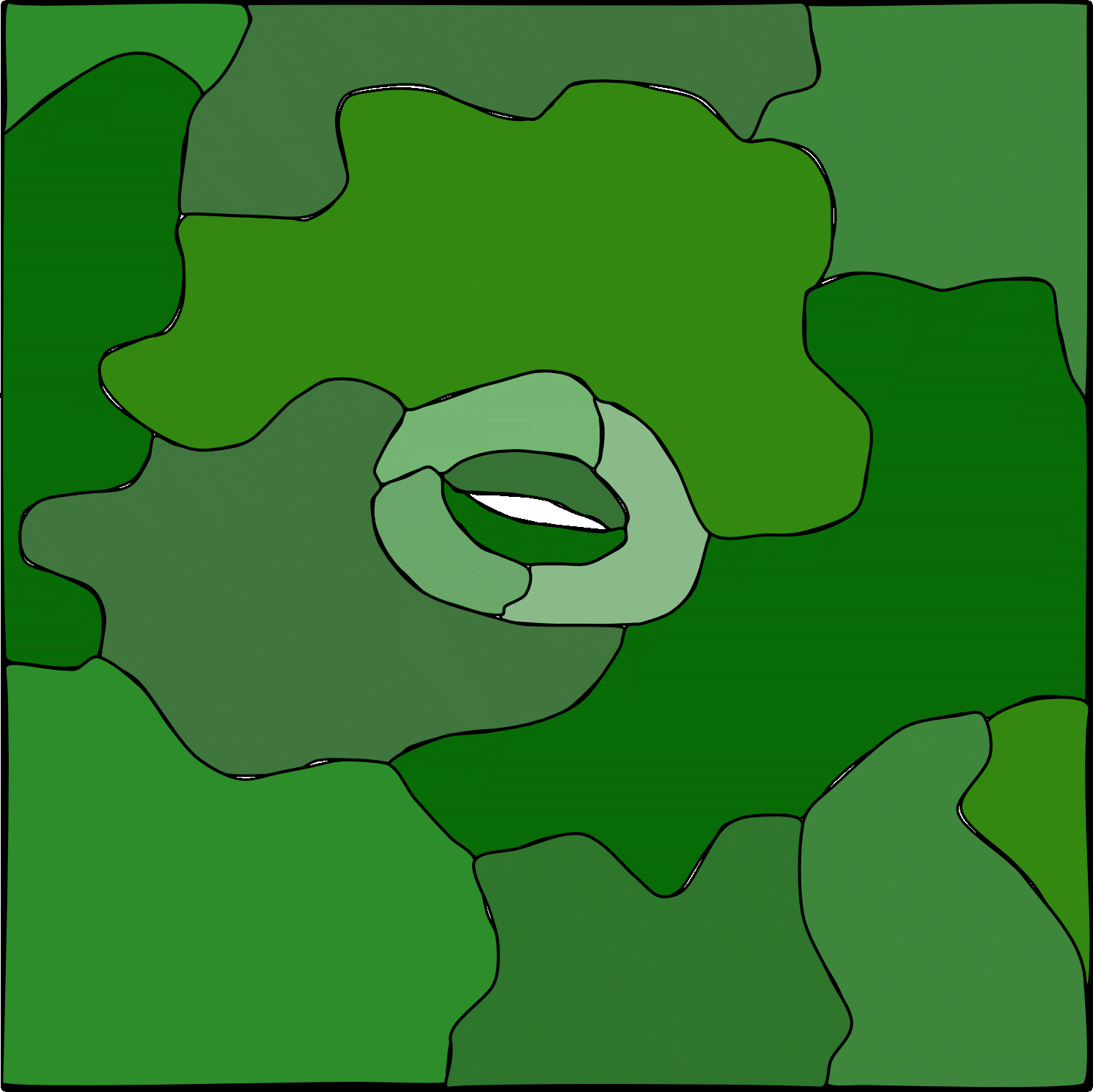
Stomata, the pores in the leaves through which plants exchange gas and water vapor, are well studied in the model plant Arabidopsis. But in some plants like succulents, they look a little bit different and have these accompanying “wingmen” cells. Now a new study in Science Advances found clues for their function and how they are formed.
In most plant stomata are formed by two kidney shaped cells that are surrounded by the like puzzle pieces formed pavement cells on the underside of the leaf. The development of those breathing pores is tightly regulated. Only cells that got the destination “meristemoid mother cell” can develop into stomata. This happens through two rounds of cell division. First an asymmetrical one, and then the smallest daughter cell divides again, but this time symmetrically, with each daughter cell forming one of the two kidney shaped stomata cell.
Wingmen
But when looking at the stomata of succulents, like Kalanchoë laxiflora, you see that between the stomata and the pavement cell there are three smaller cells that completely surround the kidney shaped stomata cells. These are the so-called subsidiary cells. You can think of them as wingmen of the kidney formed cells. The researchers of this new study wanted to find out what those cells do and how they are formed.
First what they do. By monitoring the potassium ions, which function as signal for the cell to take up more water, the researchers noticed that when the pores were closed the potassium ions were mainly seen in the “wingmen cells”. These cells swelled up, pressing the kidney shaped stomata cells closed. The opposite was the case when those stomata where open, the potassium ions could be found in the kidneys shaped cells.
So how do these “wingmen” cells form? To find out the researchers studied the formation of stomata. The noticed that after the first asymmetric cell division of cells destined to become stomata cells, the smallest cell underwent two more asymmetric cell divisions. Then divided three times asymmetrical with the larger cell undergoing the subsequent asymmetric division and the smaller cell becoming a “wingmen” cell. After this third division the largest daughter cell, surrounded the three “wingmen” cells, divides symmetrically to form the kidney shaped stomata cells.
A flipped gene
In Arabidopsis it is the gene regulator MUTE that makes sure to stop asymmetric cell division and to initiate the symmetric cell division required for the forming of the two kidney shaped cells. Surprisingly the researchers found that in Kalanchoë laxiflora, the two MUTE genes present were needed for the earlier asymmetric divisions. Those that occurred after switching from the ‘general’ stomata development pathway to the succulent stomata development pathway.
When there was more MUTE present in the succulents, more asymmetric “wingmen” cell creating cell divisions take place, before the final stomata forming symmetric cell division occurred. This was also supported by the observation that in those plants there were also more genes active that supported asymmetric cell division. This shows that succulents have repurposed the MUTE gene regulator.
This cleaver trick, which resulted in the creation of “wingmen” cells, helps succulents to survive in hot dry places. By having this extra support, the plants can keep their pores tightly shut during the day. Preventing unnecessary water loss.
Literature
Xin Cheng et al., MUTE drives asymmetric divisions to form stomatal subsidiary cells in Crassulaceae succulents. Sci. Adv.12, eaeb8145(2026). https://www.science.org/doi/10.1126/sciadv.aeb8145
 Plant en Zo