
Hijacking flower genes to make galls
How Dasineura asteriae manage to produce flower-like galls
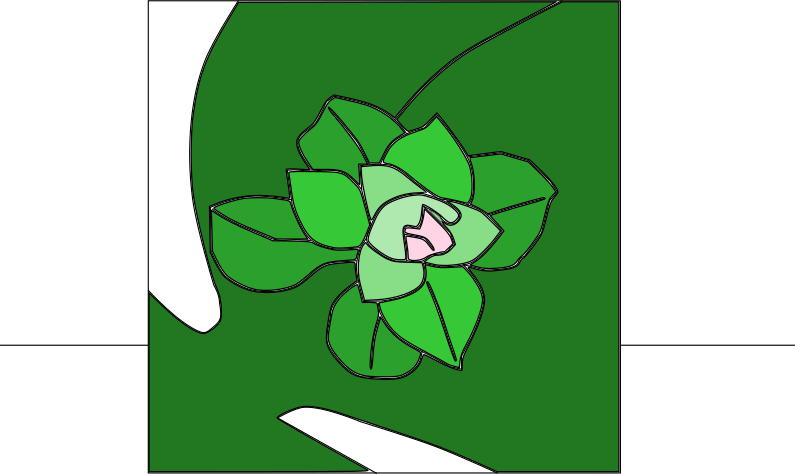
You have likely come across them, galls, deformities on leaves or stems. The larvae of various insects induce galls, varying from simple tissue deformities to complex structures. Like the sponge balls described by Phil Gates in his Substack post “Sponge balls are in season”. It was this post that made me sit up when I came across an article titled “Dasineura asteriae Reprograms the Flower Gene Expressions of Vegetative Organs to Create Flower‐Like Gall in Aster scaber”.
While those flower-like galls are maybe not as visually appealing as the sponge-balls out of Phil Gates post, they are impressive. Resembling the in shape to that of water lilies, they are more than simple deformities. And their shape is striking as flowers of the Aster scaber look more like daisies.
Intrigued the researchers liked to find out how the fly Dasineura asteriae pulls off this feat. The researchers started with having a good look at the flower-like gall structure. They noticed that after hatching the larvae of Dasineura asteriae buried themselves vertically in the leaves of the plant.
Not for reproduction
There they first created a little chamber by inducing trichomes, leaf-hairs, that bend over to cover the larvae. Subsequently the researchers observed that within a week a dome like structure had formed. From this the first tepal-like leaves developed. Those leaflets keep developing forming a kind of rosette. Later on, this dome-like structure turns from green to either yellow, pink, red or white. Giving it the appearance of a flower bud.
When dissecting those flower-like structures the researchers noticed that in contrast to real flowers, these structures were missing the reproductive organs. They had no petals, stamen, pollen, or pistil. In their place the researchers found a hollow chamber housing the larvae.
Subsequently, the researchers wanted to know how those structures formed. For this they first sequenced the genome of Aster scaber, looked up the flower producing genes and found out how they were behaving. They noticed that in the developing flower-like galls, the flower developing genes were activated. With the exception of those genes needed to produce the reproductive organs. Those were actively repressed.
Hormonal disbalance
Now the question was what activates those flower genes. For this the researchers looked at the hormone levels in the leaves and flower-like galls. As hormones like auxin and cytokinin are known to steer organ development. They noticed that specific cytokinin varieties were highly abundant, while the other growth hormone, auxin was barely detectable.
Looking closely at the larvae, the researchers observed that they had suspicious high levels of auxin, and barely any cytokinin in them. The researchers suspect that the larvae hold on to the auxin that it consumes while feeding, while it excretes the ingested cytokinin. As such creating a local hormonal disbalance that promotes the formation of flower-like galls.
But if this is the only method in which the Dasineura asteriae larvae promote the production of flower-like galls, or that it steers the gall formation in a more active ways, that is currently unknown.
Literature
Boo, K.-H., Oh, Y.K., Møller, C., Lee, D., Jeon, G.L., Kim, D., Burow, M., Großkinsky, D.K., Kim, J., Ryu, M.Y., Lee, B., Suh, J., Ha, C.M., Roitsch, T., Lim, P.O., Berger, F., Suh, J.-W., Kim, S.-I., Oh, T.R., Cho, S.K., Kim, W., Kim, S., Riu, K.Z. and Yang, S.W. (2025), Dasineura asteriae Reprograms the Flower Gene Expressions of Vegetative Organs to Create Flower-Like Gall in Aster scaber. Plant, Cell & Environment. https://doi.org/10.1111/pce.70127
 Plant en Zo