
Creating an oxygen-restricted niche
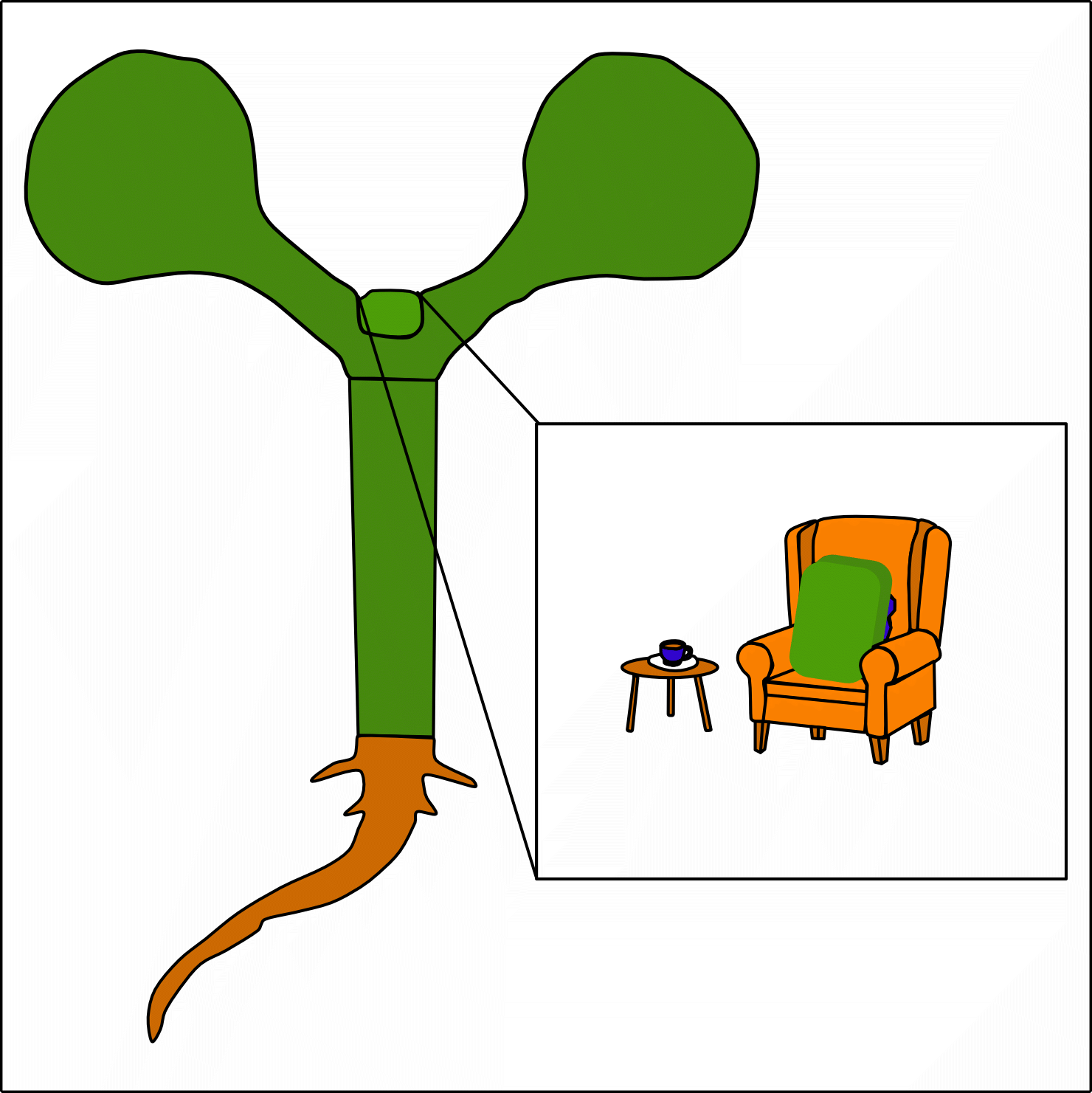
Although plants, just like us, need oxygen, their growth centre, there where the leaves and stems emerge, is surprisingly low on oxygen. There, there is four to six times less than in the air outside the plant. Scientists believes that this is needed to keep that growing tip functioning. But up till now it was unknown how plants establish and maintain that low oxygen niche. Now a group of international researchers show in Molecular Plant how a plant manages this.
The growth centres of the plant are responsible for the production of all new organs, like leaves and stems, of the plant. The shoot apical meristem is the growth centre produces new leaves and stems and does this from a small group of stem cells. One of the features of this growth centre is that it is low on oxygen. And although scientists have their suspicions of why that is, testing this is difficult without knowing how a plant creates this low oxygen niche. So, the researchers set out to find out.
After having confirmed in tomato and tale cress plants that this region is indeed low on oxygen, they analysed how the cells were packed into this region using X-ray scans. In contrast to leaves, whose cells are loosely packed with lots of airy spaces, the cells of the shoot apical meristem where tightly packed. Restricting the movement of air, including oxygen.
A physical barrier
But how tightly the cells were packed was not the only thing the researchers looked at. Next, they checked if another physical barrier also prevents the oxygen from coming in. The barrier they were looking at was the cuticle, a waxy outer layer. After having checked that the growth centre is indeed covered by a waxy layer, they tried to remove it, using mutants that did not produce the waxy molecules or broke them down quickly.
This turned out to be more complicated than first thought. But eventually the researchers found that when this waxy layer was absent, even partially, more oxygen managed to get into the shoot apical meristem. Although in the middle of the growth centre there still had a low oxygen niche.
Now the researchers had found how the plant prevents oxygen getting in, the next question was, how does the plant maintain this niche. For that the researchers turned to oxygen use. The mitochondria of plants, just like their human counterparts, use oxygen to produce energy from glucose. When the researchers shut down these mitochondria in the growth centre, then the oxygen levels creep up. Although, they were still lower than outside the growth centre.
Nothing missed
To confirm this in a more natural setting the researchers looked at oxygen levels in the growth centre when they where naturally starved, like at the end of the night, when mitochondria have less to do. This showed that at dawn the oxygen levels were higher than later in the day.
Having all found that, the researchers wondered if there was anything that they had missed. Ideally, they would have created a plant which missed the waxy-layer, had inactive mitochondria, and a less densely packed growth centre. But this was not possible. So, they did the second-best thing, they put all their obtained data in a model and asked it if they missed anything. As the outcomes of the model overlapped with what was observed, it strongly suggests that there are no additional factors contributing to the establishment and maintenance of the low oxygen levels.
Now researchers have found out how plants establish and maintain low oxygen levels in their shoot apical meristem, they start finding out why that low oxygen niche is required. Is it as they think to prevent the breakdown of essential proteins or are there other reasons as well? Moreover, it might give researchers tools to tweak the size of the growth centre and through that the size and shape of the plant. And might give insights into how to improve flood resistance.
Literature
Voloboeva V., Dequeker B., Van Doorselaer L., Panicucci G., Perata P., Verboven P., Nicolai B., and Weits D.A. (2026). The hypoxic niche enclosing the shoot apical meristem is shaped by a combination of morphological features and metabolic activity. Molecular Plant doi: https://doi.org/10.1016/j.molp.2026.02.011

