
Switching from 2D into 3D
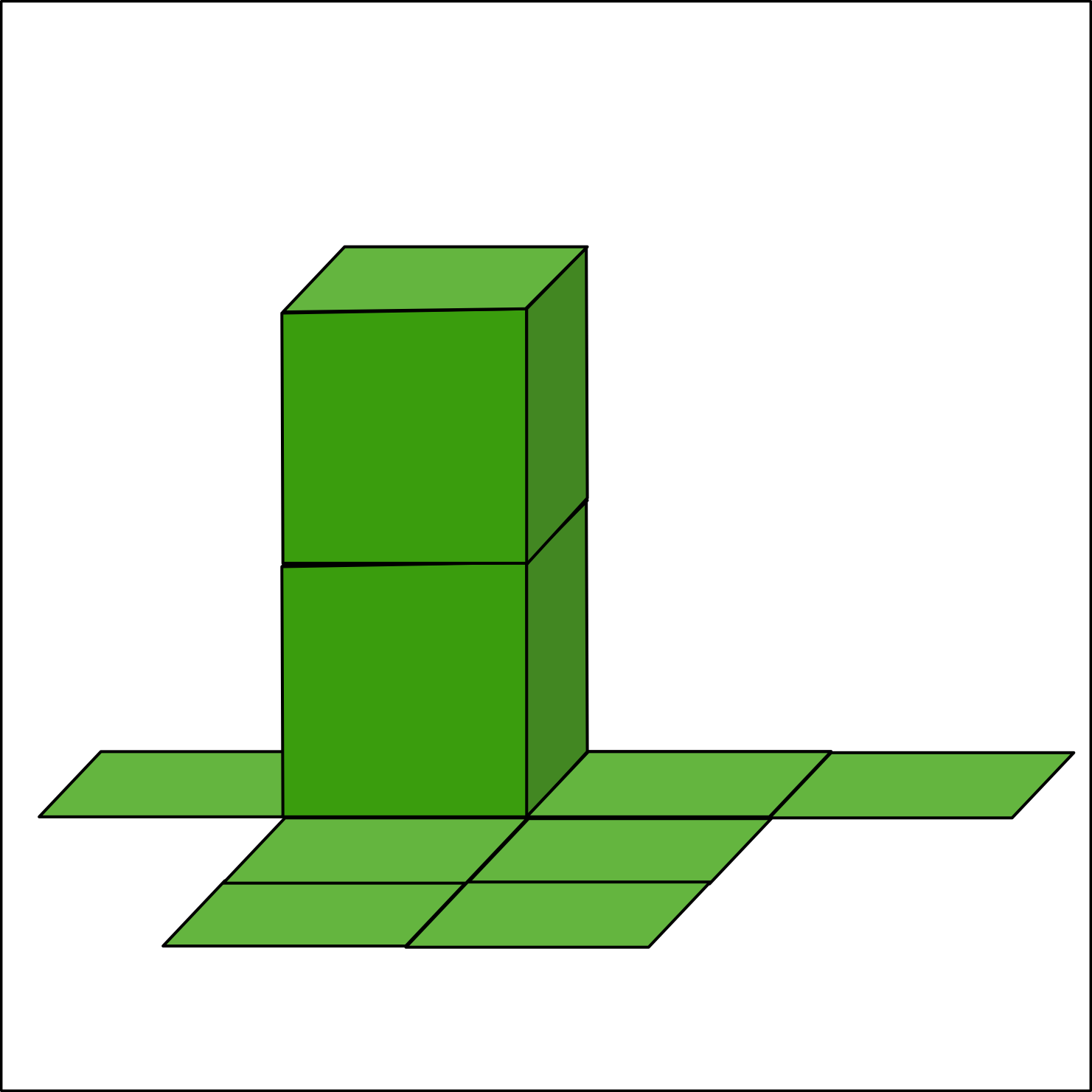
Life as we know it happens in 3D. So, when a group of international researchers found a gene that appears to have a role in the transition from 2D into 3D development they where excited.
The shift from 2D life into 3D life was an essential ingredient for the colonization of land by plants. In essence it is one of the foundations of life as we currently know it. This happened around 470 million years ago.
So, it is understandable that scientist want to know more about how plants shift from developing on a 2D plane and start growing into 3D. To study this they have turned to the moss Physcomitrium patens, which has a 2D growth phase that can be maintained in essence indefinitely, and a 3D growth phase that they use for reproduction but is not needed for survival.
Strange looking proteins
However, this study did not start with analysing that transition in particular. The researchers had set out to study the mosses MAPK proteins, which add a phosphate group to proteins they regulate. While characterising those they stumbled on two odd looking ones. They were way larger. Looking closely, they noticed that these MAPK proteins where fused with so called NATD proteins, which add acetyl groups to proteins for regulation.
Naturally the researchers wanted to find out what those fusion proteins, which they called RAK1 and 2, do. So they deleted them. While moss without RAK2 could not survive, moss without RAK1 did.
Studying those RAK1 missing moss plants closely, the researchers noticed that they formed less 3D buds. Zooming in showed that the development of those buds stopped at the stage when division shifted from a 2D plane into a 3D one. Suggesting that RAK1 is needed for this 2D into 3D shift.
No universal switch
Now the question was what does RAK1 exactly do. Remember that RAK1 is made up of two types of proteins that both modify other proteins to regulate their activity. The researchers found that RAK1 could do both, adding a phosphate group and adding an acetyl group. While the researchers found that for lots of proteins in RAK1 missing moss plants had a different modification compared to those in moss plants with RAK1, they don’t believe RAK1 is responsible for all of them. Just a handful of well-placed proteins could function as a starting point, whit those proteins affection the modifications on other proteins.
So in moss RAK1 regulates the proteins involved in switching from a 2D cell division plane into a 3D one. But what about other 3D plants? That is where the excitement stops, as the researchers only found RAK genes in closely related moss species. Suggesting that in most plants the switch from 2D into 3D is not a single gene.
So what does this all mean? It means that mosses that go from a 2D phase into a 3D phase have a protein that coordinates this. It doesn’t mean that they have found a universal switch that turns 2D life into 3D.
Literature
de Luxán-Hernández, C., Ammitsøe, T.J., Kanne, J.V., Stanimirovic, S., Redondo-Rodríguez, R., Roux, M.E., Zhang, L., Weeks, Z., Schutzbier, M., Dürnberger, G., Roitinger, E., Spadiut, O., Ishikawa, M., Hasebe, M., Moody, L.A., Dagdas, Y.F., Rodriguez, E. and Petersen, M. (2026), An N-acetyltransferase-MAPK fusion protein modulates developmental reprogramming in Physcomitrium patens. New Phytol, 251: 321-339. https://doi.org/10.1111/nph.71214
 Plant en Zo