
The hidden layer of genetic flexibility
Plants have fascinating genomes, complex with many multiplicated genes. It is one of the reasons they can produce many complex compounds. So, when I heard that they have those so-called extracellular circular DNA I was hooked.
So lets dive in.
DNA circles and herbicide resistance
When the group of Bikram Gill of Kansas State University set out to find out how Palmer amaranth (Amaranthus palmeri), a pigweed, had become glyphosate resistant at such short notice, they did not expect to find DNA circles to be at the centre of the resistance.
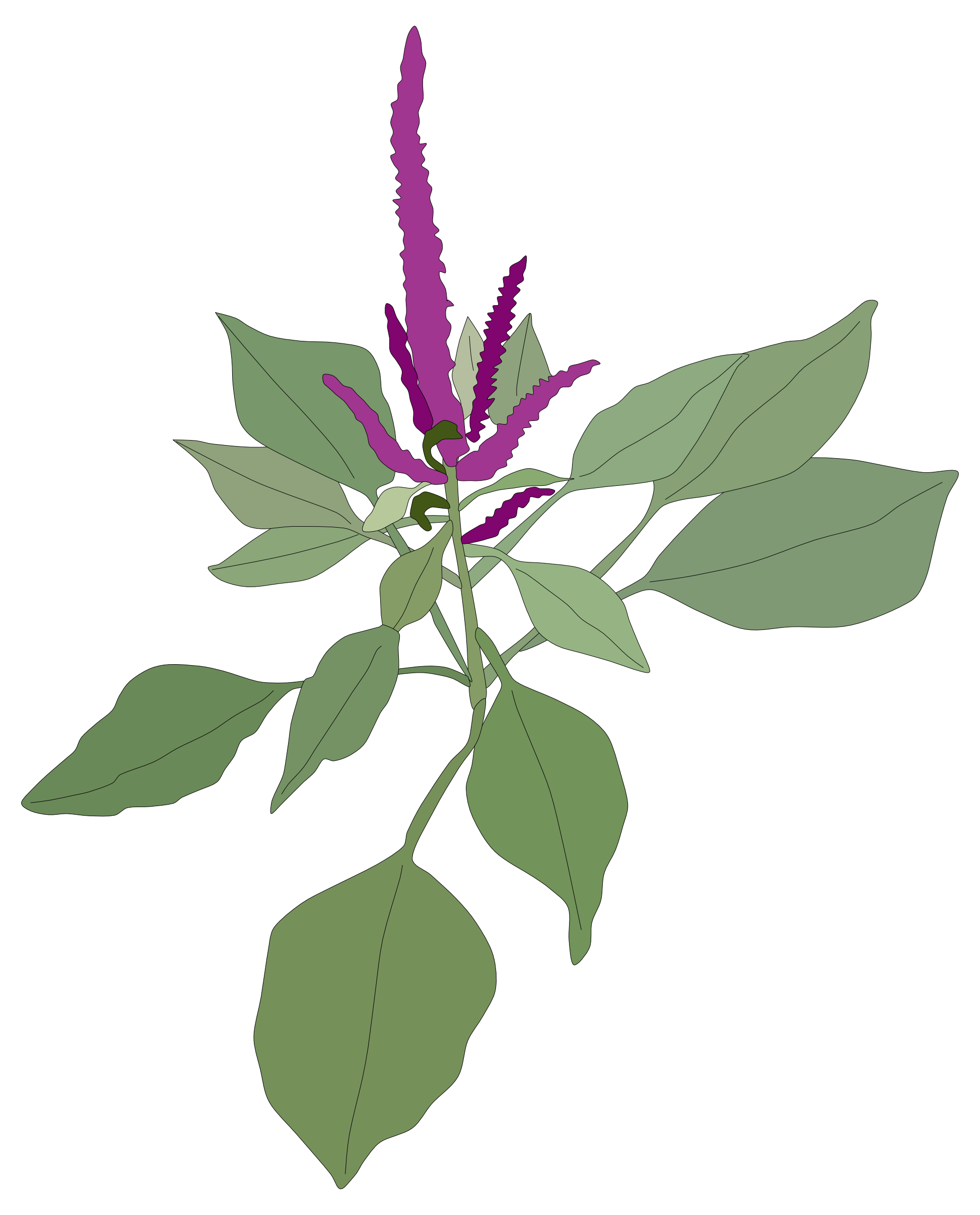
Glyphosate kills plants by preventing one of the key enzymes, EPSPS, for the production of a few essential amino acids from doing its job properly. Gill had found in an earlier study that resistant palmer amaranth had between 40 to over 100 extra copies of the EPSPS gene. Now they wanted to know where those copies lived. Using a technique that let the researchers see were EPSPS was located in the genome the researchers were surprised to find that over half of the time they saw EPSPS located on a circular structure, extrachromosomal circular DNA. In each cell they found hundreds of these DNA circles, or eccDNAs, each with a single EPSPS copy. Allowing the cell to make hundreds more copies of this enzyme than they otherwise would have. Enough to overcome the negative effects of glyphosate.
These DNA circles sound a lot like bacterial plasmids. At the same time, they exist alongside the chromosomal genome of eukaryotes – plant, animal, and fungi. In the last decade or so researchers not only worked on finding out what those DNA circles do, but also try to find out how. Slowly pointing to a hidden layer of genetic flexibility.
So, what are DNA circles?
Plants and other eukaryotes have their genome ordered on chromosomes. Those chromosomes contain the genes and the bits of DNA that regulate those genes needed to build and maintain an organism. And those chromosomes are large.
Now can you imagen the surprise when Alix Bassel and Yasuo Hotta looking down an electron microscope in 1965 saw those tiny DNA circles, that appeared to be independent of chromosomal DNA. At first, it was thought those DNA circles contained junk DNA. Although research on DNA circles found in cancer cells quickly let to the discovery that they could also carry genes. But even so, for a long time isolating and sequencing those observed DNA circles was a difficult task.
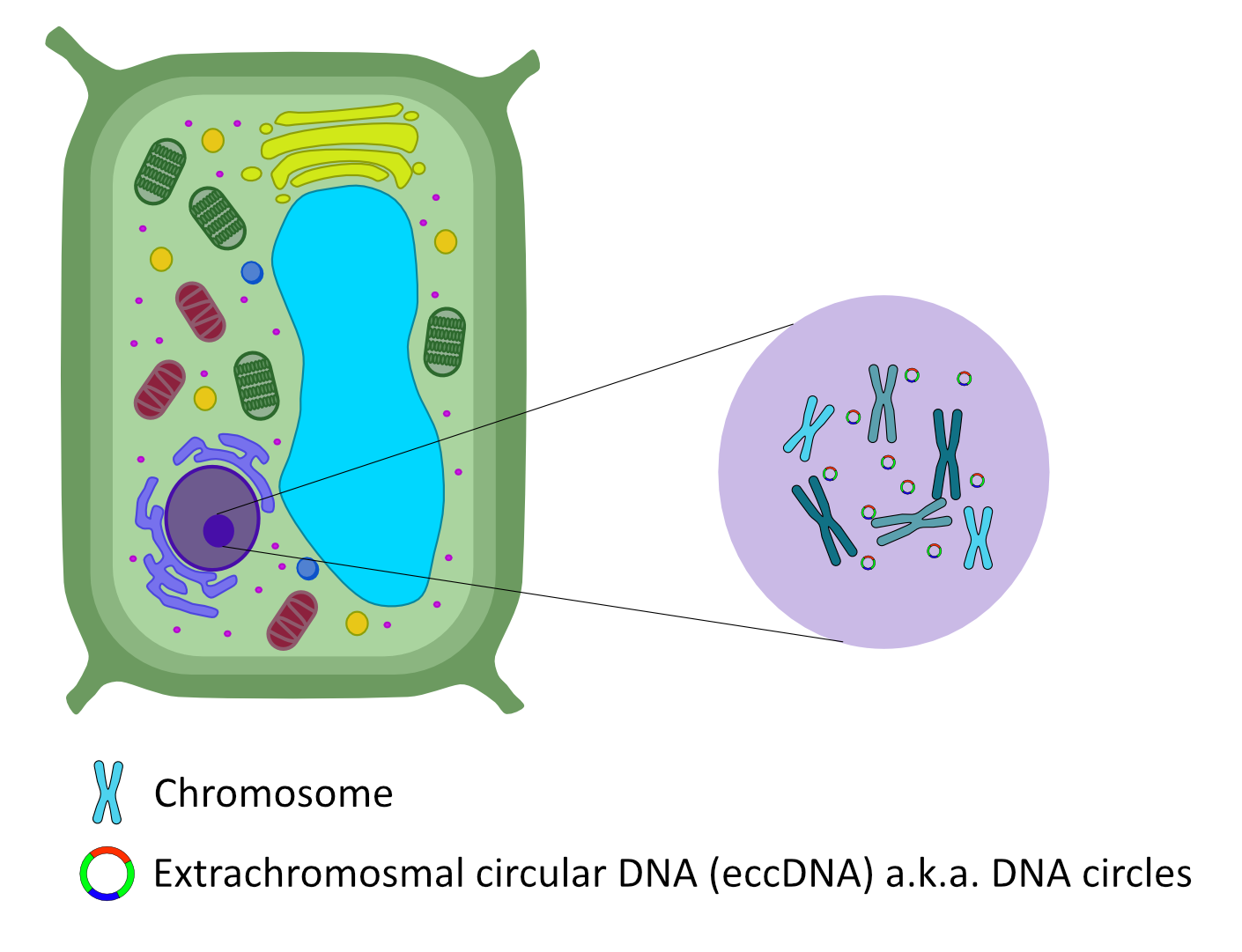
Interest in DNA circles grew when they were found in more organisms, and that the genes found on DNA circles were actively transcribed. But it wasn’t till the advancement of high throughput sequencing and bioinformatic analysis of those sequences that the first real hints came that DNA circles were more than a strange by product with a role in cancer biology. One of these hints came from glyphosate resistant palmer amaranth.
Self-replicating
One of the first things the group of Gill did after discovering DNA circles being the carrier of the EPSPS gene was checking their inheritance. Following DNA circles painstakingly through rounds of divisions they noticed that during division those DNA circles stayed close to the chromosomes. Leading to a random inheritance by the daughter cells and next generation of palmer amaranth plants. Explaining how the herbicide resistance was kept by subsequent generations.
Intrigued Christopher Saski, a former member of Gill’s group, went on to sequence the EPSPS containing DNA circles. Finding that this DNA circle had more surprises in stock. Not only was it a massive 399 kilobases and did it contain 59 genes. It had picked up those genes and other parts from all over the genome.
The analysis also flagged regions that might be involved in independent replication. This discovery earned this DNA circle the nickname: eccDNA Replicon.Saski tested those flagged regions in yeast, finding that indeed they enabled independent replication of a yeast plasmid. Combined this suggests that DNA circles behave like spare set of instructions. Whose copying and passing on happens in an unpredictable and independent way from the neat chromosomal inheritance.
DNA circles in rice
While the eccDNA Replicon is the most studied DNA circle in plants, it is not the only one. Other herbicide resistant weed species have their own versions of an eccDNA Replicon. This could be seen as just a resistance quirk, similar to DNA circles and their involvement in cancer, was it not for other types of DNA circles found with other functional genes.
One of these were discovered by Luis Rafael Herrera-Estrella of Texas Tech University and Guohua Xu of Nanjing Agricultural University. After reading about the role of DNA circles in palmer amaranth herbicide resistance they wondered if in rice DNA circles were involved in nutrient stress response. They looked at the sequences of DNA circles present in plants before and after they were starved of either nitrogen or phosphorus.
Finding that even under non-starving conditions there were DNA circles containing mainly genes that have a role in developmental processes. But when the plants were starved the DNA circle gene profile switched to genes whose proteins help with nitrogen uptake or managing phosphorus starvation. On the DNA circles Herrera-Estrella and Xu also found traces of transposable elements, a.k.a. jumping genes, suggesting that the origin of those nutrient-starvation induced DNA circles lay there.
Shock absorbers
So DNA circles are circular DNA molecules that can be inherited. But unlike the inheritance of chromosomes of which each daughter cell gets one copy each, DNA circles get inherited in a more random way. Further it appears that DNA circles formation can be induced or triggered by stress, and plants can increase their numbers if needed. This let at the beginning of this year (2026) Dana MacGregor from Rothamsted Research together with Saski to propose that DNA circles might function as genomic shock absorbers giving plants a hidden layer of flexibility.
According to MacGregor and Saski, DNA circles allow the cell to temporally increase its gene activity outside what would normally be possible without rearranging chromosomes, for as long as is needed. Then when no longer required, the cell can discard the no longer needed DNA circles. This is what is kind of seen for herbicide resistance and nutrient stress response. And sometimes this out of the box thinking by the genome is needed for survival.
Intriguing as this hypothesis might be is that all that there is to DNA circles, a flexible layer around the core genome that gets activated at times of stress?
Everyday processes
But the rice study of Herrera-Estrella and Xu hinted at something more. That DNA circles are not just induced during stressful situations like herbicide exposure or nutrient stress, but also for normal everyday developmental processes. Like regulating seed germination.
Diving deeper into this I come out by Marie Mirouze of the University of Perpignan. Being interested in the mobile part of the genome, like retrotransposons Mirouze set out to find a way to identify those jumping genes in DNA circles. Then she then analysed the DNA circles in rice seeds as a prove of concept. Finding one particular highly active jumping gene named PopRice. PopRice flooded the rice seeds with DNA circles.
A later study found out why. When Jungnam Cho, of the Shanghai Institute of Plant Physiology and Ecology, blocked the formation of PopRice eccDNAs, rice seeds no longer germinated as quickly as they normally do. Cho found that under normal conditions PopRice eccDNAs are formed in response to the plant hormone that promotes seed germination.
But looking closer at the sequence of PopRice eccDNAs Cho found that it contained particular stretches of DNA. All of which bind proteins that influence gene activation in response to a seed germination inhibiting hormone. When Cho increased the amount of PopRice eccDNA in rice seeds the genes suppressed by gene regulatory proteins that bind to PopRice eccDNA where more active. Suggesting that PopRice eccDNAs takes the gene regulatory proteins that bind to it out of action so that they can’t no longer inhibit seed germination. In this way DNA circles speed up germination as the seed no longer has to wait for the unwanted gene regulatory proteins to break down.
In addition to PopRice eccDNA, other plant DNA circles were found to be involved in regular plant developmental processes. Like protein synthesis and flowering regulation. Suggesting that DNA circles play a role in the regulation of everyday processes as well.
Not yet fully understood
Although researchers get a better understanding of the processes in which DNA circles are involved, how they are formed and regulated is still not yet fully understood. There are multiple suggestions of how DNA circles might form. So can, for example, highly repetitive sequences induce something called Looping Out, which creates DNA circles. Another way is via DNA repair, that can also accidentally create DNA circles in an attempt to repair chromosomal DNA fragments. And genes that are very active, might also be more susceptible to become DNA circles.
That said there is one method towards which the evidence is mainly pointing to: jumping genes. Researchers studying DNA circles sequences have found the fingerprints of jumping genes in a lot of those. Moreover, from multiple jumping genes it is known that they use DNA circles as part of their way of jumping through the genome. And, when researchers remove the tight control which jumping genes are under, they see more DNA circles with fingerprints of jumping genes. Making them a very attractive explanation for the formation of DNA circles.
So, are DNA circles genomic shock absorbers?
So, DNA circles carry functional genes, can increase the gene dosage at will, and increase at times of stress. But they also are involved in non-stress functions and appear at low background levels under normal conditions. Together the accumulating evidence is pointing to a more nuanced role.
Like other known genome-regulatory systems, DNA circles are involved in everyday developmental processes but also give the genome a chance to respond flexible when the situation asks for it. Making them more another flexible layer around the core chromosomal genome, than just genomic shock absorbers.

