
How soybeans get the most out of offered help
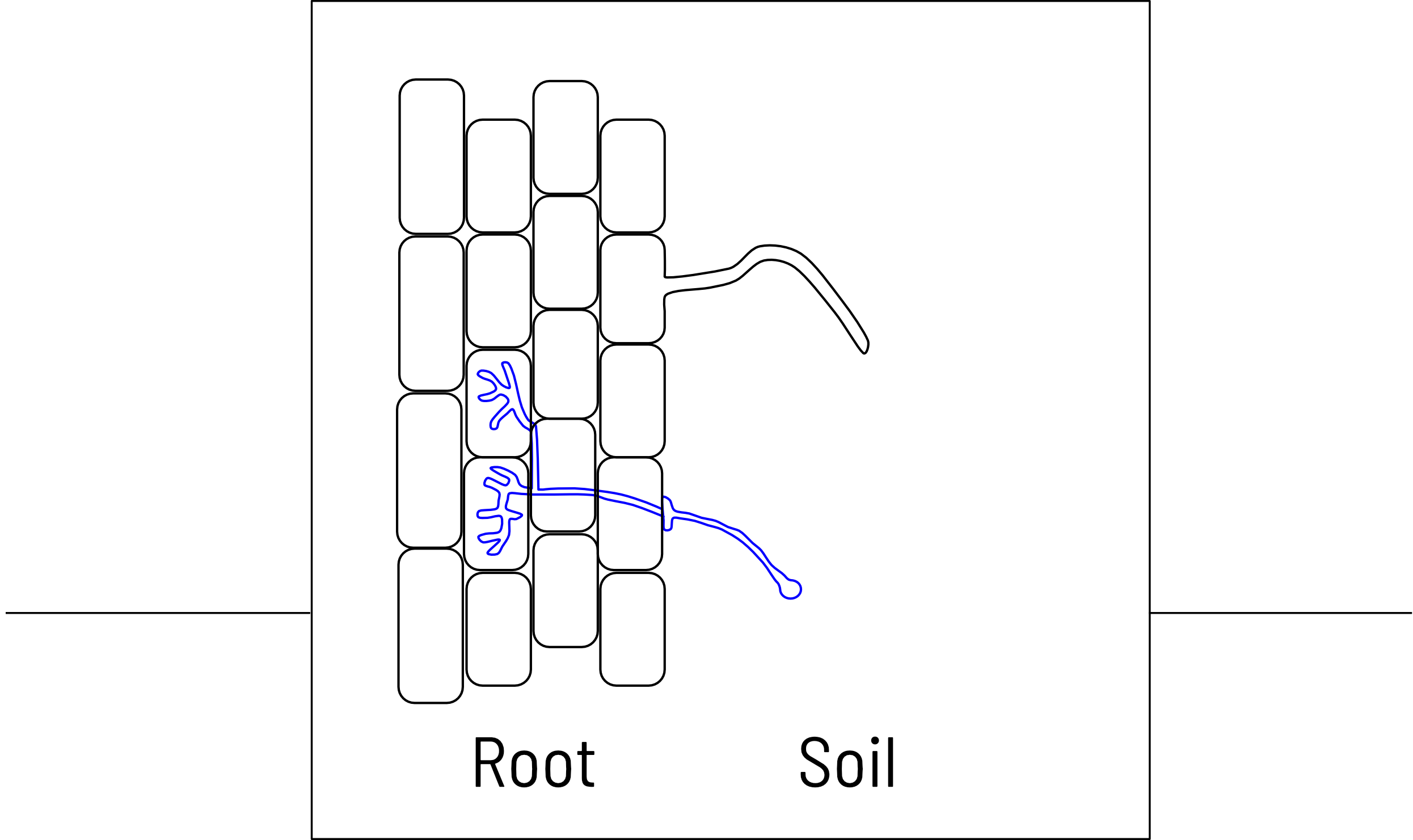
Plants have different strategies to deal with nutrient shortages. One of those is asking for microbial help. For example, in case of a phosphate shortage plants like to work with arbuscular mycorrhizal fungi.
By this symbiosis the fungi create so called arbuscules in root cells. There a single membrane is separating the fungi from the plant cells, something that makes it easier to exchange of nutrients. But as you can understand this is something that is tightly regulated.
There is for example only a symbiosis between fungi and plant when there is a shortage of nutrients. A group of genes that is involved in this as regulators of the SPX-genes. These block the symbiosis when they perceive that there is enough phosphate.
New role for SPX genes
Only, it turns out that these SPX genes do not have in all plants the exact same function. In legumes, that also initiate symbiosis with nitrogen fixing bacteria, another gene family has the symbiosis blocking function.
That is not to say that in legumes SPX gene do not have a role in the regulation of the symbiosis with arbuscular mycorrhizal fungi. In new research “GmSPX5 regulates arbuscular mycorrhizal colonization and phosphate acquisition through modifying transcription profile and microbiome in soybean” Chinese researchers show that SPX5 does have a role in regulating the symbiosis with arbuscular mycorrhizal fungi.
The Chinese researchers wondered if the SPX genes were active in soybeans during an arbuscular mycorrhizal symbiosis. To find out they check the activity of each of the 10 SPX genes of soybean. Finding that only SPX5 was active during the symbiosis. This was not only at the location in the root where the fungi forms arbuscules. But also, although to a slightly lesser extent, in the rest of the plants.
Communicating with microbes
Subsequently the researchers studied the effect of active SPX5 on the rest of the genes. They found that SPX5 increases the biosynthesis of flavonoids and jasmonic acid. Both of which are involved in the communication between fungi and plants.
In addition, the researchers also studied the effects of SPX5 on the rest of the plant microbiome. Finding that when SPX5 is active, plants attract more microbes that stimulate the growth of plants, but the plants also attracting bacteria that help the fungi with the release of nutrients from the soil.
Although more research is needed to find out how exactly this all works. It appears that SPX5 in legumes has a more symbiosis stimulating role. As if it wants to get as much out of the symbiosis as possible.
Literature
Yang, X., Li, Y., Wang, T., Li, Z., Zhuang, Q., Liang, C., Wang, X. and Tian, J. (2025), GmSPX5 regulates arbuscular mycorrhizal colonization and phosphate acquisition through modifying transcription profile and microbiome in soybean. Plant J, 124: e70511. https://doi.org/10.1111/tpj.70511
 Plant en Zo