
Hooked hairs
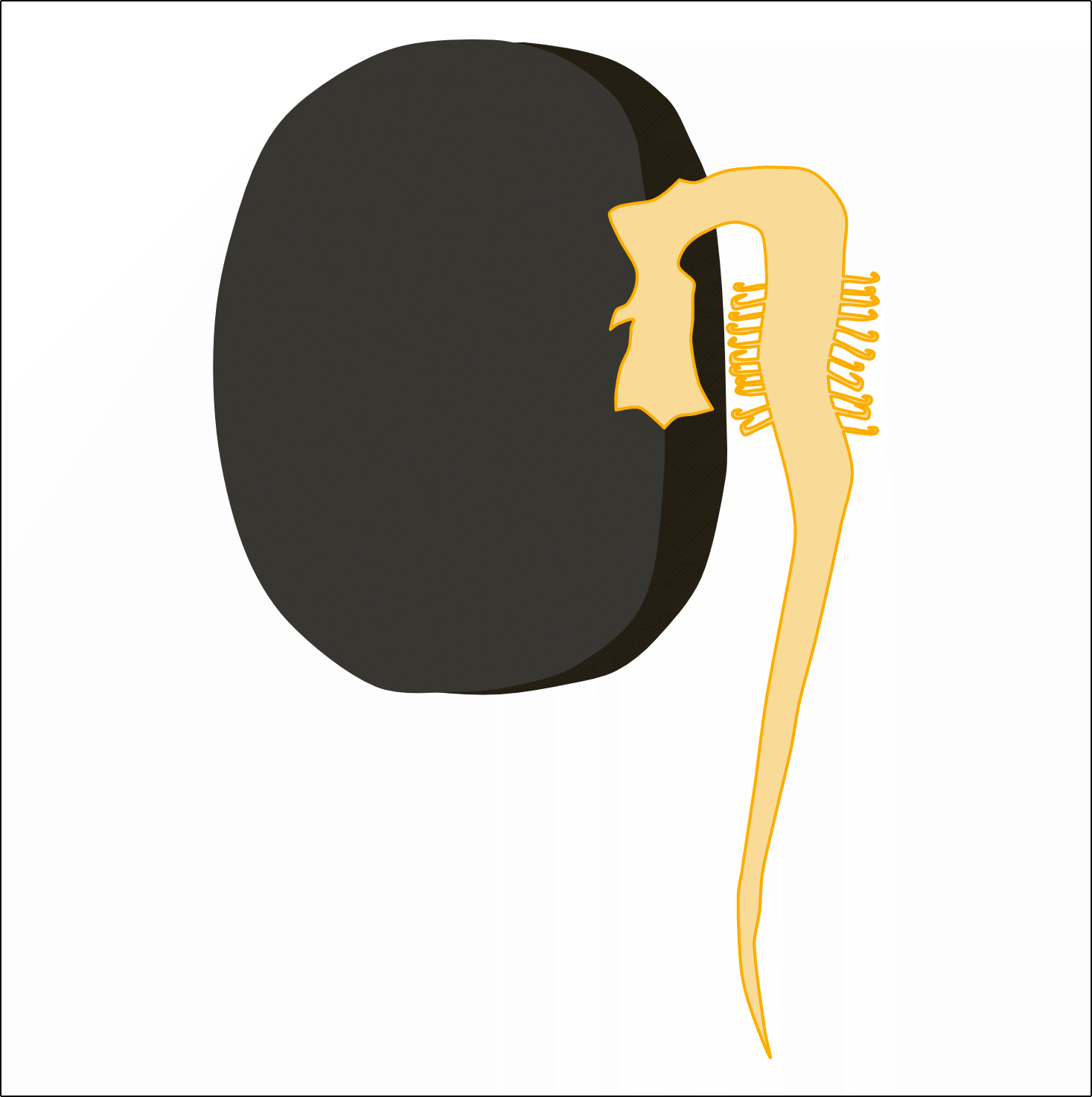
Sometimes when you look closely at something, you see something new. That is what a group of American researchers found when they looked closely at bean seedlings. In Science Advances they report about the up until now unknown hooked hairs on these seedlings.
Plants have hairs, all over their body. Roughly speaking these can be grouped into trichomes for the hairs on the above ground tissue and root hairs for those on the below ground tissue. And where root hairs are straight, trichomes can come in multiple shapes and forms. But recently an in between hair was observed in bean seedlings. This hair forms on the seedling root, before any root hairs form. And in contrast to the regular root hairs, this hair forms a hook with its tip, as if it wants to anchor itself in the soil. Now the researchers wanted to know more about this hooked hair.
How do they form?
The first thing the researchers did was looking more closely at its development. Finding that hooked hairs develop during the first three days after germination. For reference known root hairs don’t start developing till ten days after germination. Hooked hairs start out as bulges, like bubbles on outer root cells. They then stretch out, and in the end, they form a hook. This hook always looks the same and are oriented in the same direction.
How much hooked hairs stretch themselves that, the researchers noted, depends on the amount of phosphorus and nitrogen in the soil. Is there less present, then the hooked hairs stretch out more. Together this suggests that hooked hairs are not only different from root hairs, but also from trichomes.
Is it really a new cell type?
Nowadays researchers realise that cells not only can be grouped together on how they look like, but also on what genes are active. Therefore to confirm the observational suggestion, the researchers looked at the active genes in trichomes, root hairs, and hooked hairs. Using a technique called single cell transcriptomics, the researchers then looked at the active genes in individual cells.
In this way they could see that cells forming trichomes could be clustered in one group based on the active genes, and cells forming root hairs in two other groups. Then the researchers focussed on the genes active in hooked hairs and found that they clustered together in a separate group, for which up until now it was unknown to which cell type they belonged.
Looking more closely at the active genes, the researchers found that genes encoding for proteins involved in transporting molecules like nutrients and water across membranes were especially active. Suggesting that this might be the main function of hooked hairs.
Helping with nutrient uptake
To confirm this the researchers checked if known processes related to nutrient and water uptake occurred during nutrient limitation. In case of both phosphorus and nitrogen shortage, hooked hairs responded with taking measures that enhances nutrient uptake. This suggests that they indeed are involved in in nutrient uptake. The researchers also found that hooked hairs produce a specialized barrier that plays a role in nutrient and water retention.
One of the benefits of root hairs is that they enlarge the surface for nutrient and water uptake. This study shows that although hooked hairs are a different cell type, they provide the same functional service at a tricky time at the bean’s development. By being there, they enhance the chance of a good start.
This research also shows that non-model organisms can have unique adaptations. These we overlook if they are not studied. This especially in the case of crops might prevent breeders from using these unique adaptations for developing robust crops. Afterall, what is unknown cannot be used.
Literature
Sergio Alan Cervantes-Pérez et al., Hooked hairs: A cellular key adaptation aiding seedling survival in nutrient-limited and drought conditions. Sci. Adv. 12, eadz6873 (2026). https://www.science.org/doi/10.1126/sciadv.adz6873

