
Shifting DNA markings
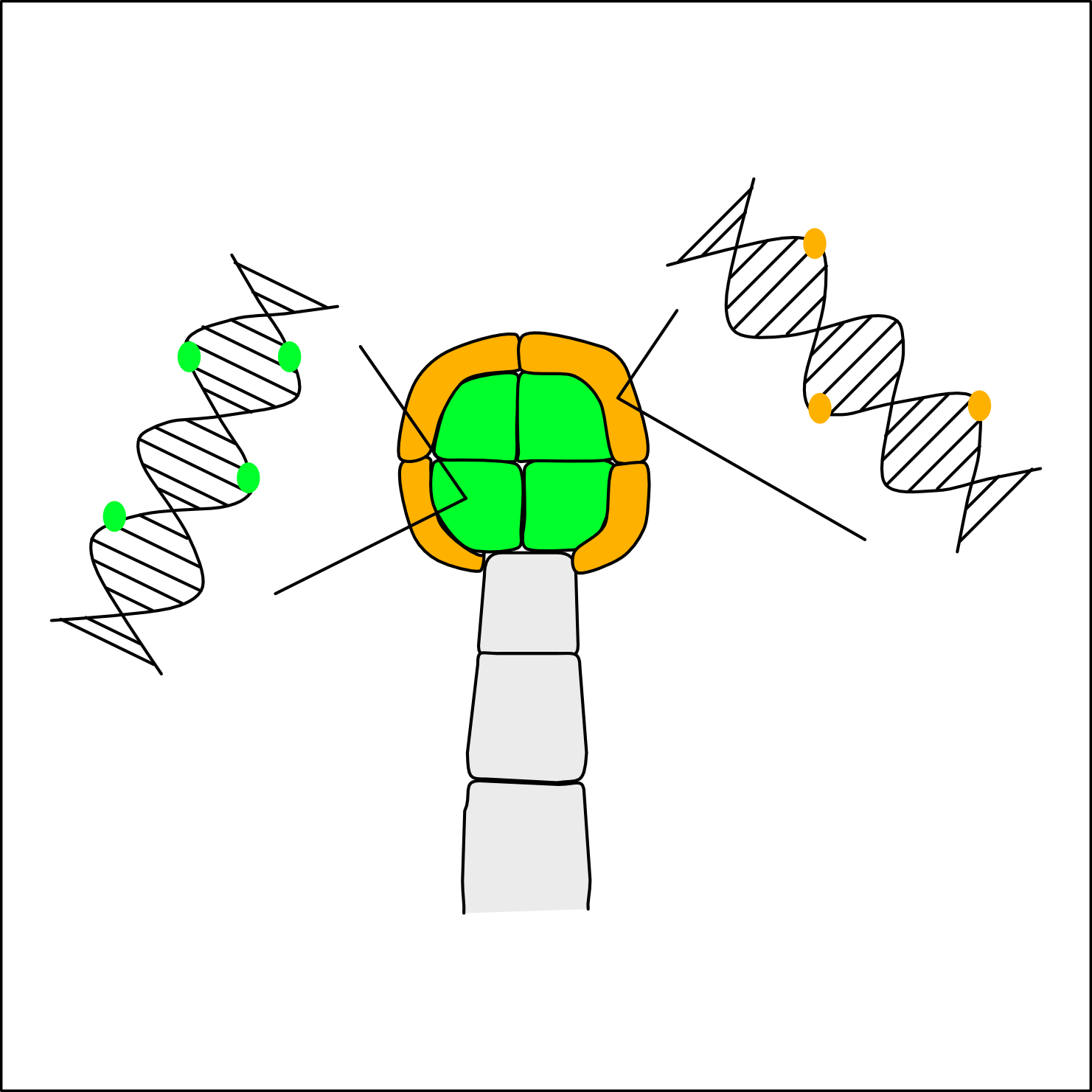
Markings on the DNA help plant cells ‘remember’. Who they are. In what developmental stage they are. Their environment. Now a new study in Communications Biology by Chinese researchers shows that during the early stages of embryo development these DNA marks shift frequently.
Epigenetic regulation is the regulation of gene expression by making the DNA. This can occur at two different levels. The first is direct attachment of a methyl marker to the DNA. The second occurs by leaving a mark on the histone proteins around which DNA is wrapped. Both types of markings make the DNA more, or less, accessible.
Together these markings help the cell ‘remember’ which type of cell it is. With ‘remembering’ at what stage of developmental development the plant of which the cell is part of is in. And with ‘remembering’ what kind of environmental stresses the plant came across. This ‘remembering’ happens through making parts of the genome accessible and by blocking others.
Embryo development
Most of the time these markings remain relatively stable, as not much is changing in the life of the plant. But sometimes changes are followed rapidly. One of those is during the early stages of embryo development. The stadia between a just fertilized egg and the differentiation into specific cell types follow in quick succession.
Up till now, due to difficulties isolating developing embryos, all studies looking at how the markings on the DNA change during embryo development have only looked at later stages of this development. Over the early stages, in which cells differentiate from a totipotent cell, all options open, into a specific cell type, only one option remains, little is known how the markings change. The researchers of this new study decided to change that. They were in particular interested in the directly to the DNA attached methyl markings.
By looking at five different early stages of developing tale cress, Arabidopsis, embryos, they found that during the early development markings changed location time and again. Showing that the cells get assigned different tasks at each stage. The researchers found by looking at the genes that are active at each stage of the development, that the changes of the markings correspond to the changes in which genes are active.
Equal markings
Lastly, they looked at it mattered for the DNA that got marked if it came from mum or dad. They did this by using parents who are genetically different from each other. For each difference in the DNA they looked if there was a marking and if this marking was on the DNA strand coming from mum or from dad. Finding that the DNA of mum is just as often marked as the DNA coming from dad.
So, in summary, the makings on the DNA that allow genes to be accessed or not, change rapidly during the early stages of embryo development, and corresponds with which genes are active and which not. This is a general feature, and not so much dictated by if a DNA strand is coming from mum or dad.
Literature
Wang, W., Huang, Y., Hou, C. et al. DNA methylation remodeling reveals epigenetic regulation of early embryogenesis in Arabidopsis hybrid. Commun Biol (2026). https://doi.org/10.1038/s42003-026-10245-5

