
When Leaves Get Sick, Roots Call for Help
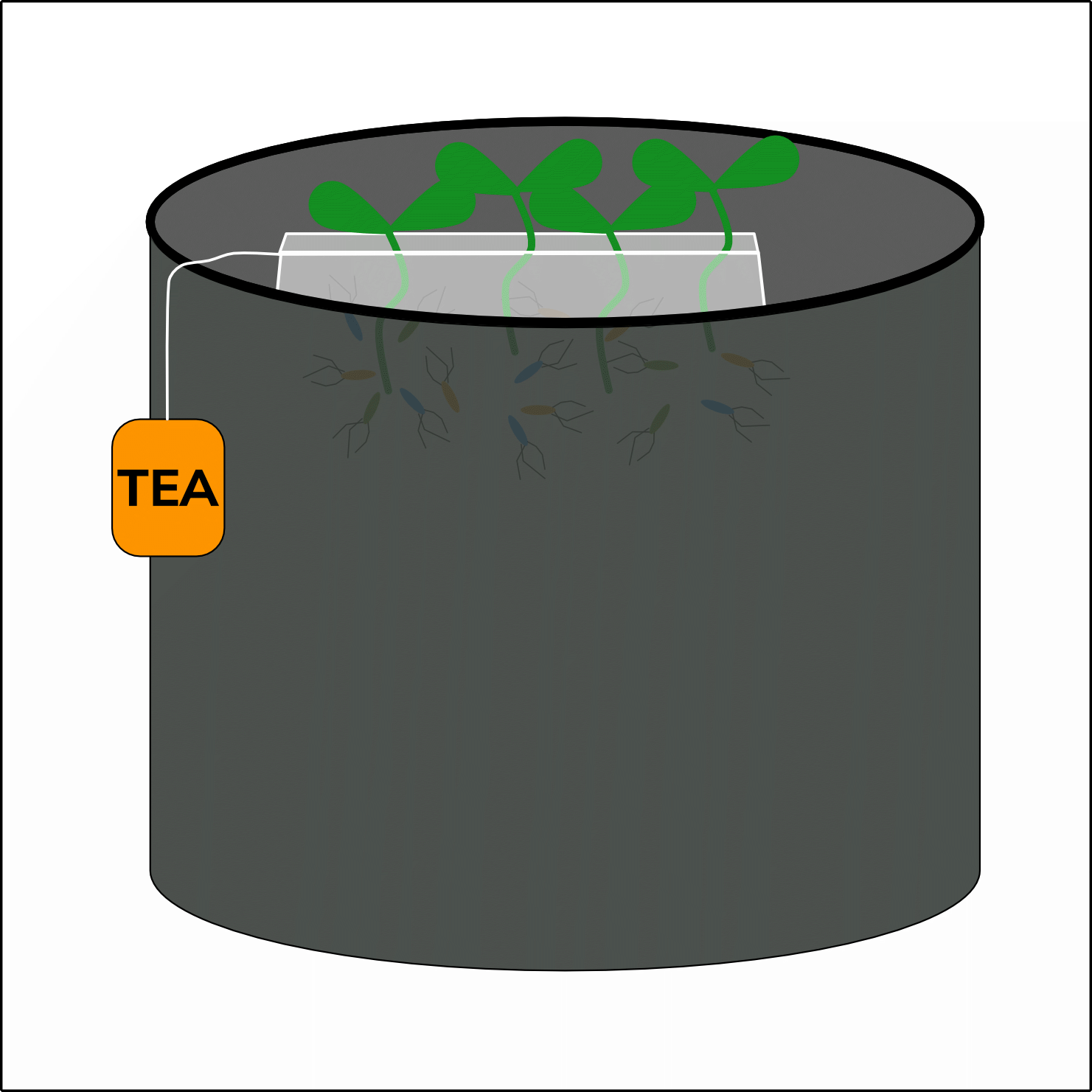
That disease repressive soils form through microbiome recruitment by plants is known for a couple of decades. But how plants recruit those protective microbes, that is still not well understood. Now a new study by Dutch researchers shows that upregulation of the production of key specialised metabolites in plants is required for the disease repressive soils to be established.
Before we go into what the study exactly found, lets first discuss what is known about plant-microbiome interactions and their protective effect.
Plants interact with microbes in three ways. The first is by providing carbohydrates, or sugar. These entice microbes to grow nearby plant roots. The second is the excretion of toxins, like coumarins. With these, plants keep unwanted microbes outside their neighbourhood. The last group of molecules plants excrete, are those that call out to specific microbes. Flavonoids are an example of this last group.
So, part of the protective effect of a plant microbiome comes from crowding out the space around the roots so pathogens can’t reach it. But another important effect of the microbiome is that it induces systemic resistance. This tells the defence response team to be on high alert for intruders. As well as increasing the physical barrier which pathogens need to cross before they can infect the plant.
Now this new study shows that the roots of plants infected by downy mildew – which infects the leaves – quickly spring into action and increase the production of the specialised metabolites 4MO-I3M (an indole glucosinolate), camalexin, and flavonoids. And that the soil in which downy mildew infected plants grow that can’t produce these metabolites doesn’t become disease repressive.
So how did the researchers find this out?
The first thing the researchers did, was looking in Arabidopsis (thale cress) for clues in the genes that were activated in the roots after a downy mildew infection. This showed a quick and large change in which genes were active and which were not.
The researchers noted that a large group of genes that were affected all had to do with the glucosinolate biosynthesis. Most of the genes of the pathway were less active, but there were four exceptions. All genes needed for the production of 4MO-I3M. To confirm if 4MO-I3M indeed was needed for getting disease repressive soils the researchers tested the soil in which downy mildew infected plants grew that couldn’t make any 4MO-I3M. Finding that indeed this soil didn’t become disease repressive.
Next the researchers tested plants missing gene regulator of those 4MO-I3M biosynthesis genes or a key biosynthesis gene of camalexin, which is also regulated by that same gene regulator. Finding that in these cases the soil also did not become disease resistant after downy mildew infected plants that missed those genes grew in it. Suggesting that not only 4MO-I3M is needed, but also camalexin, for the production of downy mildew disease repressive soils.
Lastly the researchers noted that the genes of the flavonoid biosynthesis pathway were also less active in the roots after a downy mildew infection. This made them wonder about the if these influence the development of disease repressive soils. Using plants that either could not produce any flavonoids or anthocyanins the researchers found that flavonoids are needed for the establishment of disease repressive soils, but anthocyanins not.
Together this suggests that downy mildew infected plants call in the help of soil microbes. Whereby flavonoids probably function to call in specific microbes, and 4MO-I3M and camalexin probably functions as antimicrobials to keep the unwanted responders at bay. Further studies are needed to confirm that this is indeed what is happening.
Literature
Qi, R., Glavincheska, I., Spooren, J., Liu, X., Van Laatum, M., Verstappen, F., Kappers, I.F., Berendsen, R.L., Pieterse, C.M.J. and Van Wees, S.C.M. (2026), Root gene regulatory network analysis reveals roles for defense hormones and secondary metabolites in establishment of disease-suppressive soil. New Phytol. https://doi.org/10.1111/nph.71769

