Most genetic differences within species, two Arabidopsis (tale cress) varieties have between 300000 to 400000 of those, about 0.2 to 0.3% of their genome, do not result in a phenotype. Instead, their effects are buffered away. One of the ways plants and other organisms do this is by providing help with protein folding, preventing misfolding. Now a group of Chinese scientists have found a potentially second way plants do this, via their spliceosome.
Genes of plants, like those of all eukaryotic organisms, contains introns, bits of sequence that don’t contribute to the protein the gene encodes for. In the process of creating the messenger RNA, the recipe card from which is used during the synthesis of the protein, those introns are spliced out by a protein complex called the spliceosome. This seems a bit complex, why not just have genes without those introns. But because of this pre-messenger RNA processing, the cell can make slightly different versions of the same protein without having to have a separate gene for each version.
Unexpected phenotype
One of the proteins that researchers of this latest paper where studying was a protein of the spliceosome called SKIP. While doing this they stumbled on something strange. Crossing plants with a defunct SKIP with a fully functional SKIP went fine, when the researchers use the same background variety. The second generation inherited the two versions of the SKIP gene as expected: 25% had two copies of the fully functional SKIP, 25% had two copies of the defunct SKIP, and 50% had one copy of each SKIP version. But when using two different background varieties only 9% of the plants of the second generation inherited two defunct versions of the SKIP genes. Leaving the researchers puzzled.
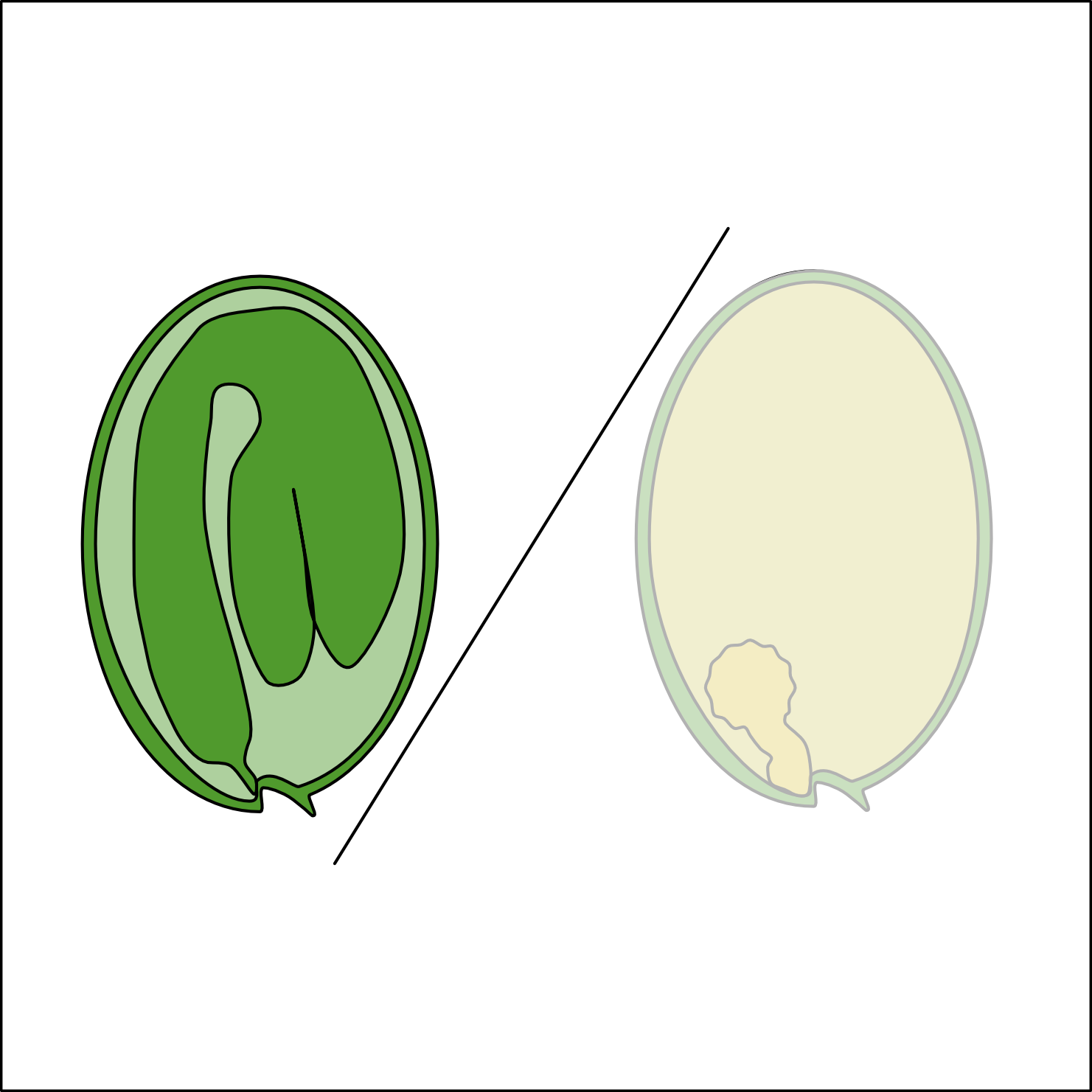
Looking closer the researchers noticed that there was no change in the chance of inheriting the defunct SKIP gene, but that seed development, when there were two versions of the defunct SKIP gene present, was often, but not always, aborted. Suggesting that a second gene was in play. After identifying this second gene, the researchers gave it the name Hidden Killer 1. Comparing the sequence of Hidden Killer 1 the researchers noticed that there where 6 differences between different varieties. One of these turned out to be the culprit of the aborted developing seeds.
Buffering mistakes
Now the question was how does a faulty SKIP result in bringing the phenotype of this completely different gene to the surface? To find out the researchers looked at how SKIP interacted with the pre-messenger RNA form of Hidden Killer 1. Noticing that it bound at the location of the offending gene variant difference but not at any of the other locations that were different. In addition, the researchers found that the splicing out of the introns of the Hidden Killer 1 pre-messenger RNA did not go according to plan when only faulty SKIP was present, resulting in a recipe card for the protein that stopped halfway. And it was this truncated protein that did the actual damage during seed development.
This suggests that the spliceosome, when fully functional, can kind of ignore the faulty instructions it comes across in the sequence of Hidden Killer 1. To prove that this was not the only time the spliceosome does this, the researchers inhibited the spliceosome from functioning properly in 15 different Arabidopsis (tale cress) varieties. This resulted in phenotypes that normally were not seen, and that were different in each of the different varieties. Suggesting that the spliceosome indeed can have a role in this. Although, like the authors of the paper say, to be sure requires further research.
Veel van de genetische verschillen binnen een soort, twee Arabidopsis (zandraket) rassen hebben er bijvoorbeeld tussen de 300000 en 400000, ongeveer 0.2 tot 0.3% van hun genoom, resulteren niet in een fenotype. Hun effect wordt weg gebufferd. Een van de manieren hoe planten en andere organismen dit doen is door hulp te bieden bij eiwitvouwing om fout gevouwen eiwitten te voorkomen. Nu laat een groep van Chinese onderzoekers weten dat ze een mogelijke tweede manier hebben gevonden hoe planten dit doen, via hun spliceosoom.
De genen van planten, net zoals die van andere eukaryotische organismen, bevatten introns, stukjes sequence die niet bijdragen aan het eiwit waar het gen voor codeert. Tijdens het proces van het creëren van boodschapper RNA, de receptenkaart die de cel gebruikt tijdens eiwitsynthese, worden die introns eruit gesneden door een eiwitcomplex genaamd de spliceosome. Dit lijk een beetje omslachtig, waarom hebben we niet gewoon genen zonder die introns. Maar vanwege deze pre-boodschapper RNA verwerking kan de cel net iets andere versies van hetzelfde eiwit maken zonder dat daar een apart gen voor nodig is.
Onverwacht fenotype
Een van de eiwitten die de onderzoekers van dit artikel bestudeerde was een eiwit van het spliceosome genaamd SKIP. En bij dit liepen ze tegen iets vreemds aan. Tijdens het kruisen van planten met een niet functionerende SKIP met die met een functioneerede SKIP ging prima zolang de onderzoekers planten kruiste met hetzelfde achtergrond ras. De planten van de tweede generatie erfde de twee versies van het SKIP gen als verwacht: 25% had twee kopieën van het functionerende SKIP gen, 25% had twee kopieën van het niet functionerende SKIP gen, en 50% had een kopie van elke SKIP versie. Maar toen de onderzoekers twee verschillende achtergrond rassen gebruikte had maar 9% van alle tweede generatie planten het niet functionerende SKIP gen. De onderzoekers verwonderd achter latend.
Toen de onderzoekers keken naar wat er aan de hand kon zijn zagen ze dat er geen verandering van in de kans op het erven van een niet functionerende SKIP gen, maar dat de ontwikkeling van zaden daar waar er twee van de niet functionerende SKIP genen aanwezig waren, vaak, maar niet altijd, stopte. Dit suggereerde dat er een tweede gen bij betrokken was. Na identificatie van dit gen, noemde de onderzoekers dit gen Hidden Killer 1. Bij het vergelijken van de sequentie van Hidden Killer 1 van de twee rassen zagen de onderzoekers dat er 6 verschillen waren. Een daarvan bleek de schuldige voor de gestopte zaad ontwikkeling.
Buffering mistakes
Nu rees de vraag hoe kan een niet functionerende SKIP resulteren in het naar de oppervlakte brengen van het fenotype van een niet gerelateerd gen? Om dit uit te vinden keken de onderzoekers hoe SKIP met het pre-boodschapper RNA van Hidden Killer 1 omging. Het viel ze op dat SKIP bond op de locatie van het schuldige genetische verschil, maar niet op de locaties van de andere genetische verschillen. Daarnaast, zagen de onderzoekers dat de het uitsnijden van de introns van het Hidden Killer 1 pre-boodschapper RNA niet volgens plan verliep wanneer er alleen functionerend SKIP eiwit aanwezig was, dit resulteerde in een eiwit receptenkaart dat halverwege stopte. Het bleek dit half gevormd eiwit te zijn die de eigenlijke schade aanbracht tijdens de zaadontwikkeling.
Dit suggereert dat het spliceosoom wanneer het volledig functioneel is, soort van de foutjes kan negeren die het tegenkomt in de sequentie van Hidden Killer 1. Om te bevestigen dat dit niet het enige geval was waarbij het spliceosoom dit doet, blokkeerde de onderzoekers het spliceosoom in 15 verschillende Arabidopsis (zandraket) rassen. Dit resulteerde in fenotypen die de onderzoekers normaal gesproken niet zagen, en die per ras verschillend waren. Wat suggereert dat het spliceosoom hier inderdaad een rol in kan hebben. Al is er zoals de auteurs van het artikel zeggen voor bevestiging meer onderzoek nodig.
Volg me op LinkedIn of BlueSky Stuur het door aan een vriend of collega Abonnneer je op m’n nieuwsletter zodat de volgende automatisch in je inbox verschijnt.
Plants have fascinating genomes, complex with many multiplicated genes. It is one of the reasons they can produce many complex compounds. So, when I heard that they have those so-called extracellular circular DNA I was hooked.
So lets dive in.
DNA circles and herbicide resistance
When the group of Bikram Gill of Kansas State University set out to find out how Palmer amaranth (Amaranthus palmeri), a pigweed, had become glyphosate resistant at such short notice, they did not expect to find DNA circles to be at the centre of the resistance.
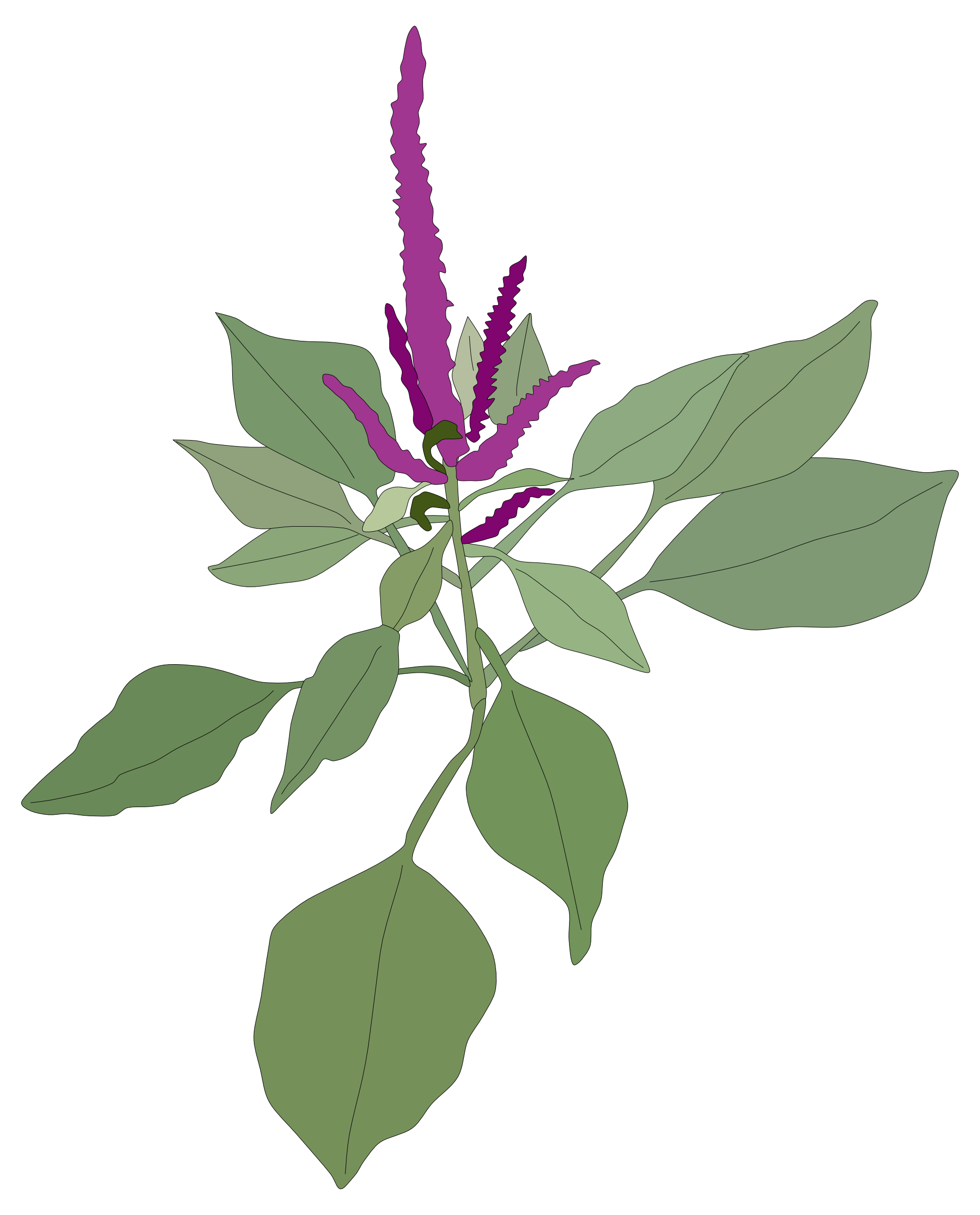
Artist impression of palmer amaranth
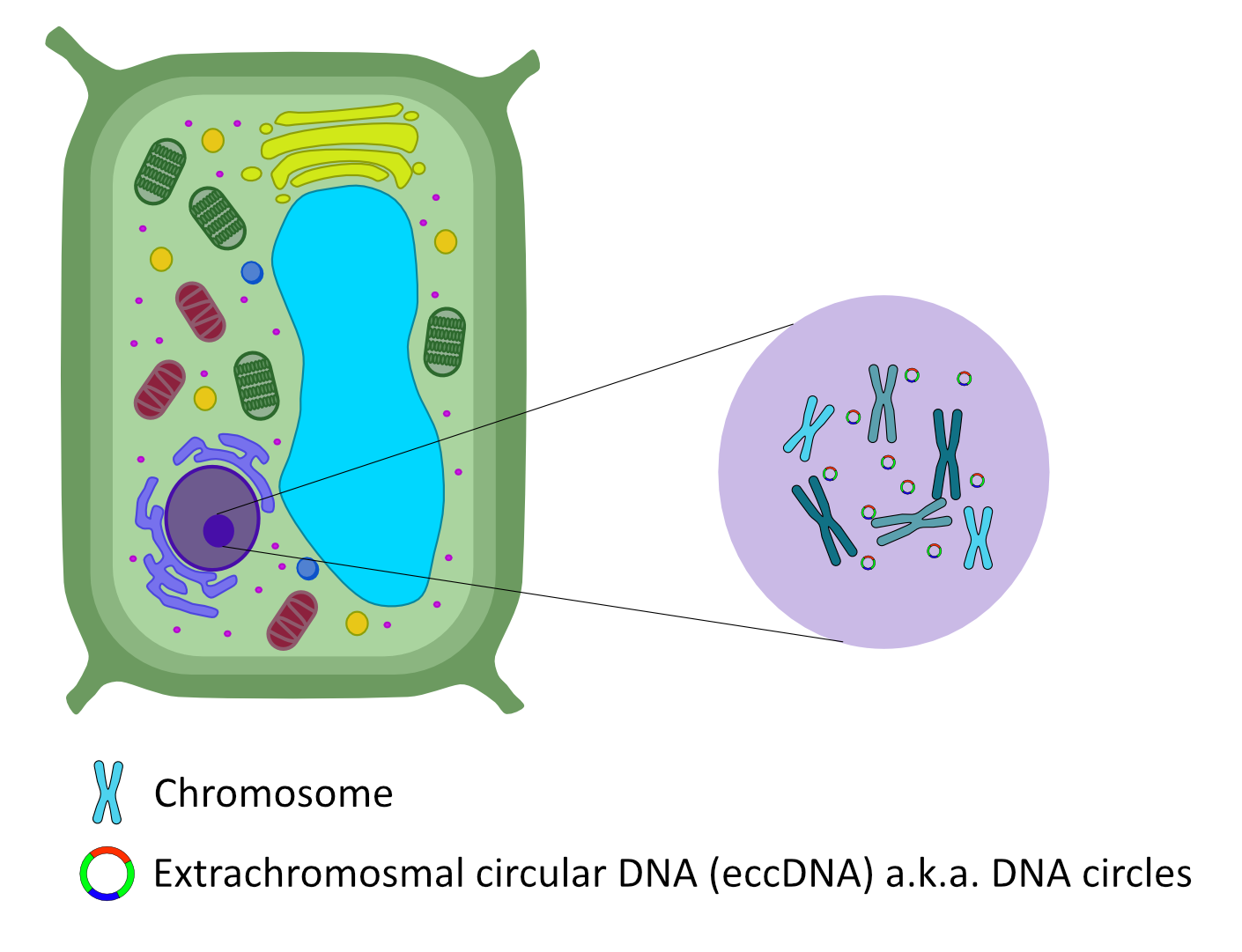
Glyphosate kills plants by preventing one of the key enzymes, EPSPS, for the production of a few essential amino acids from doing its job properly. Gill had found in an earlier study that resistant palmer amaranth had between 40 to over 100 extra copies of the EPSPS gene. Now they wanted to know where those copies lived. Using a techniquethat let the researchers see were EPSPS was located in the genome the researchers were surprised to find that over half of the time they saw EPSPS located on a circular structure, extrachromosomal circular DNA. In each cell they found hundreds of these DNA circles, or eccDNAs, each with a single EPSPS copy. Allowing the cell to make hundreds more copies of this enzyme than they otherwise would have. Enough to overcome the negative effects of glyphosate.
These DNA circles sound a lot like bacterial plasmids. At the same time, they exist alongside the chromosomal genome of eukaryotes – plant, animal, and fungi. In the last decade or so researchers not only worked on finding out what those DNA circles do, but also try to find out how. Slowly pointing to a hidden layer of genetic flexibility.
So, what are DNA circles?
Plants and other eukaryotes have their genome ordered on chromosomes. Those chromosomes contain the genes and the bits of DNA that regulate those genes needed to build and maintain an organism. And those chromosomes are large.
Now can you imagen the surprise when Alix Bassel and Yasuo Hotta looking down an electron microscope in 1965 saw those tiny DNA circles, that appeared to be independent of chromosomal DNA. At first, it was thought those DNA circles contained junk DNA. Although research on DNA circles found in cancer cells quickly let to the discovery that they could also carry genes. But even so, for a long time isolating and sequencing those observed DNA circles was a difficult task.
In a plant cell DNA circles are located with the rest of the genome in the nucleolus in the nucleus. The DNA circles, even big ones, are tiny compared to the chromosomes that contain the main genome.
Interest in DNA circles grew when they were found in more organisms, and that the genes found on DNA circles were actively transcribed. But it wasn’t till the advancement of high throughput sequencing and bioinformatic analysis of those sequences that the first real hints came that DNA circles were more than a strange by product with a role in cancer biology. One of these hints came from glyphosate resistant palmer amaranth.
Self-replicating
One of the first things the group of Gill did after discovering DNA circles being the carrier of the EPSPS gene was checking their inheritance. Following DNA circles painstakingly through rounds of divisions they noticed that during division those DNA circles stayed close to the chromosomes. Leading to a random inheritance by the daughter cells and next generation of palmer amaranth plants. Explaining how the herbicide resistance was kept by subsequent generations.
Intrigued Christopher Saski, a former member of Gill’s group, went on to sequence the EPSPS containing DNA circles. Finding that this DNA circle had more surprises in stock. Not only was it a massive 399 kilobases and did it contain 59 genes. It had picked up those genes and other parts from all over the genome.
The analysis also flagged regions that might be involved in independent replication. This discovery earned this DNA circle the nickname: eccDNA Replicon.Saski tested those flagged regions in yeast, finding that indeed they enabled independent replication of a yeast plasmid. Combined this suggests that DNA circles behave like spare set of instructions. Whose copying and passing on happens in an unpredictable and independent way from the neat chromosomal inheritance.
DNA circles in rice
While the eccDNA Replicon is the most studied DNA circle in plants, it is not the only one. Other herbicide resistant weed species have their own versions of an eccDNA Replicon. This could be seen as just a resistance quirk, similar to DNA circles and their involvement in cancer, was it not for other types of DNA circles found with other functional genes.
One of these were discovered by Luis Rafael Herrera-Estrella of Texas Tech University and Guohua Xu of Nanjing Agricultural University. After reading about the role of DNA circles in palmer amaranth herbicide resistance they wondered if in rice DNA circles were involved in nutrient stress response. They looked at the sequences of DNA circles present in plants before and after they were starved of either nitrogen or phosphorus.
Finding that even under non-starving conditions there were DNA circles containing mainly genes that have a role in developmental processes. But when the plants were starved the DNA circle gene profile switched to genes whose proteins help with nitrogen uptake or managing phosphorus starvation. On the DNA circles Herrera-Estrella and Xu also found traces of transposable elements, a.k.a. jumping genes, suggesting that the origin of those nutrient-starvation induced DNA circles lay there.
Shock absorbers
So DNA circles are circular DNA molecules that can be inherited. But unlike the inheritance of chromosomes of which each daughter cell gets one copy each, DNA circles get inherited in a more random way. Further it appears that DNA circles formation can be induced or triggered by stress, and plants can increase their numbers if needed. This let at the beginning of this year (2026) Dana MacGregor from Rothamsted Research together with Saski to propose that DNA circles might function as genomic shock absorbers giving plants a hidden layer of flexibility.
According to MacGregor and Saski, DNA circles allow the cell to temporally increase its gene activity outside what would normally be possible without rearranging chromosomes, for as long as is needed. Then when no longer required, the cell can discard the no longer needed DNA circles. This is what is kind of seen for herbicide resistance and nutrient stress response. And sometimes this out of the box thinking by the genome is needed for survival.
Intriguing as this hypothesis might be is that all that there is to DNA circles, a flexible layer around the core genome that gets activated at times of stress?
Everyday processes
But the rice study of Herrera-Estrella and Xu hinted at something more. That DNA circles are not just induced during stressful situations like herbicide exposure or nutrient stress, but also for normal everyday developmental processes. Like regulating seed germination.
Diving deeper into this I come out by Marie Mirouze of the University of Perpignan. Being interested in the mobile part of the genome, like retrotransposons Mirouze set out to find a way to identify those jumping genes in DNA circles. Then she then analysed the DNA circles in rice seeds as a prove of concept. Finding one particular highly active jumping gene named PopRice. PopRice flooded the rice seeds with DNA circles.
A later study found out why. When Jungnam Cho, of the Shanghai Institute of Plant Physiology and Ecology, blocked the formation of PopRice eccDNAs, rice seeds no longer germinated as quickly as they normally do. Cho found that under normal conditions PopRice eccDNAs are formed in response to the plant hormone that promotes seed germination.
But looking closer at the sequence of PopRice eccDNAs Cho found that it contained particular stretches of DNA. All of which bind proteins that influence gene activation in response to a seed germination inhibiting hormone. When Cho increased the amount of PopRice eccDNA in rice seeds the genes suppressed by gene regulatory proteins that bind to PopRice eccDNA where more active. Suggesting that PopRice eccDNAs takes the gene regulatory proteins that bind to it out of action so that they can’t no longer inhibit seed germination. In this way DNA circles speed up germination as the seed no longer has to wait for the unwanted gene regulatory proteins to break down.
In addition to PopRice eccDNA, other plant DNA circles were found to be involved in regular plant developmental processes. Like protein synthesis and flowering regulation. Suggesting that DNA circles play a role in the regulation of everyday processes as well.
Not yet fully understood
Although researchers get a better understanding of the processes in which DNA circles are involved, how they are formed and regulated is still not yet fully understood. There are multiple suggestions of how DNA circles might form. So can, for example, highly repetitive sequences induce something called Looping Out, which creates DNA circles. Another way is via DNA repair, that can also accidentally create DNA circles in an attempt to repair chromosomal DNA fragments. And genes that are very active, might also be more susceptible to become DNA circles.
That said there is one method towards which the evidence is mainly pointing to: jumping genes. Researchers studying DNA circles sequences have found the fingerprints of jumping genes in a lot of those. Moreover, from multiple jumping genes it is known that they use DNA circles as part of their way of jumping through the genome. And, when researchers remove the tight control which jumping genes are under, they see more DNA circles with fingerprints of jumping genes. Making them a very attractive explanation for the formation of DNA circles.
So, are DNA circles genomic shock absorbers?
So, DNA circles carry functional genes, can increase the gene dosage at will, and increase at times of stress. But they also are involved in non-stress functions and appear at low background levels under normal conditions. Together the accumulating evidence is pointing to a more nuanced role.
Like other known genome-regulatory systems, DNA circles are involved in everyday developmental processes but also give the genome a chance to respond flexible when the situation asks for it. Making them more another flexible layer around the core chromosomal genome, than just genomic shock absorbers.
Thanks for reading. If you like what you read, support me with on of the following actions
Planten hebben fascinerende genomen, complex met veel gedupliceerde genen. Het is een van de redenen dat ze zoveel complexe stoffen kunnen maken. Dus toen ik hoorde dat ze deze zogenaamde extrachromosomaal circulair DNA hebben was ik geïntrigeerd.
Zo hier gaan we.
DNA cirkels en herbicide resistentie
Toen de groep van Bikram Gill van Kansas State University begonnen met het uitzoeken hoe tweehuizige amarant (Amaranthus palmeri), een veel voorkomend onkruid in de Verenigde Staten, glyfosaat resistentie in zo’n korte tijd had ontwikkeld hadden ze niet verwacht dat DNA cirkels de kern vormde van de resistentie.
Artisteike impressie van tweehuizige amarant
Glyfosaat dood planten door de werking van een van de noodzakelijke enzymen, EPSPS, voor de productie van een paar essentiële aminozuren te verhinderen. Gill had in een eerdere studie gevonden dat tweehuizige amarant tussen de 40 tot 100 extra kopieën van EPSPS had. Nu wilde ze weten waar die kopieën zich in het genoom bevonden. Een techniek gebruikende die de onderzoekers liet zien waar in het genoom EPSPS zat verraste de onderzoekers dat voor meer dan de helft van de tijd ze EPSPS terugvonden op circulaire structuren, ook wel extrachromosomaal circulair DNA genoemd. In elke cel vonden ze honderden van deze DNA cirkels, of eccDNAs, elk had een enkel EPSPS kopie. Dit gaf de cel de mogelijkheid om honderden extra kopieën van dit enzym te maken dan dat ze anders hadden kunnen doen. Genoeg om de negatieve effecten van glyfosaat te overkomen.
Deze DNA cirkels klinken erg als bacteriële plasmiden. Ze bestaan naast het chromosomaal genoom van eukaryoten – planten, dieren, en schimmels. In de laatste 10 jaar of zo werkte onderzoekers niet alleen aan het uitvinden van wat die DNA cirkels doen, maar probeerde ook uit te vinden hoe ze dat doen. Dit alles wijst zo langzaamaan naar een verborgen laag van genetische flexibiliteit.
Zo, wat zijn DNA cirkels?
Planten en andere eukaryoten hebben hun genoom geordend op chromosomen. Deze chromosomen bevatten de genen en de stukken DNA die deze genen reguleren die nodig zijn voor de ontwikkeling en het in leven houden van een organisme. En die chromosomen zijn groot.
Nu kan je de verbazing voorstellen toen Alix Bassel en Yasuo Hotta in 1965 door de elektronenmicroscoop keken en kleine DNA cirkels zagen, die onafhankelijk van het chromosomaal DNA leken bestaan. In het begin dachten ze dat die DNA cirkels alleen maar junk DNA bevatte. Alhoewel onderzoek naar DNA cirkels in kanker al snel liet zien dat ze ook genen konden bevatten. Toch bleef de algemeenheid hiervan voor lang onduidelijk. Het isoleren en sequencen van de geobserveerde DNA cirkels was namelijk voor lange tijd een moeilijke taak.
In een plantencel zitten DNA circles met de rest van het genoom in kernlichaampje in de kern. De DNA circles, zelfs grote, zijn klein in vergelijking met de chromosomen die het hoofd genoom bevatten.
De ontdekking van DNA cirkels in meer en meer organismen, en de vondst dat de genen op DNA cirkels actief zijn deed de interesse groeien. Maar het was de ontwikkeling van high throughput sequencen en bio-informatie analyse van die sequenties dat de eerste aanwijzingen kwamen dat DNA cirkels meer waren dan een vreemd bijproduct met een rol in kanker. Een van die aanwijzingen kwam van glyfosaat resistentie in tweehuizige amarant.
Zelf vermeerderend
Een van de eerste dingen die de groep van Gill deed na de ontdekking dat de DNA cirkels de dragers van het EPSPS gen ware was kijken naar hun overerving. Door de DNA cirkels nauwkeurig te volgen ontdekte de onderzoekers dat tijden celdeling de DNA cirkels dicht bij de chromosomen bleven. Dit had als gevolg dat dochtercellen en de volgende generatie tweehuizige amarant planten ze willekeurig erfde. Dit verklaart ook hoe herbicide resistentie behouden bleef bij de opeenvolgende generaties.
Geïntrigeerd volgde Christopher Saski, een voormalig lid van de groep van Gill, dit op met het sequencen van de EPSPS bevattende DNA cirkels. Hij vond dat deze DNA cirkel nog meer verassingen in petto had. Niet alleen was het een massieve 399 kilobasen, het bevatten ook 59 genen. Deze en andere onderdelen had het opgepikt van verschillende delen van het genoom.
De analyse bracht ook regio’s onder de aandacht die betrokken konden zijn bij zelfstandige vermeerdering. Deze ontdekking gaf deze DNA cirkel de bijnaam: eccDNA Replicon. Saski testte vervolgens deze ontdekte regio’s in gist en bevestigde dat ze inderdaad zelfstandige vermeerdering van het gist-plasmide mogelijk maakte. Samen suggereert dit dat DNA cirkels zich gedragen als een set reserve instructies. Wiens manier van kopiëren en doorgeven onvoorspelbaar en onafhankelijk van het nette chromosomaal erven gebeurt.
DNA cirkels in rijst
Alhoewel de eccDNA Replicon de meest in planten bestudeerde DNA cirkel is, het is niet de enige. Andere herbicideresistent onkruid soorten hebben hun eigen versie van een eccDNA Replicon. Dit kan je zien als een simpel resistent dingetje, net zoals DNA cirkels en hun betrokkenheid in kanker, was het niet voor andere soorten van DNA cirkels met andere functionele genen.
Een van deze werd ontdekt door Luis Rafael Herrera-Estrella van Texas Tech University en Guohua Xu van Nanjing Agricultural University. Na het lezen over DNA cirkels en hun rol in tweehuizige amarant herbicide resistentie vroegen ze zich af of in rijst DNA cirkels betrokken waren bij de stressreactie op voedingsstoffen tekort. Ze keken daarom naar de sequentie van DNA cirkels aanwezig in planten voor en na deze waren gekort op stikstof of fosfaat.
Zo vonden ze dat zelfs onder niet uithongerende omstandigheden er DNA cirkels aanwezig waren, deze bevatte voornamelijk genen met een rol in ontwikkelingsprocessen. Maar nadat de planten waren uitgehongerd verschoof het DNA cirkel gen profiel naar dat van genen wiens eiwitten helpen met stikstof opnamen of het omgaan het een fosfaat te kort. Daarnaast vonden Herrera-Estrella en Xu op de DNA cirkels ook sporen van transposable elementen, of te wel springende genen, wat suggereert dat deze aan de oorsprong van de door voedingsstof te kort gevormde DNA cirkels liggen.
Schockdempers
Dus DNA cirkels zijn circulaire DNA moleculen die geërfd kunnen worden. Maar in tegenstelling tot het erven van chromosomen, waarbij elke dochtercel een kopie krijgt, erven cellen DNA cirkels op een willekeurige manier. Daarnaast lijkt het dat DNA cirkel vorming kan worden gestimuleerd door stress, en dat planten ze in aantal kunnen vermeerderen wanneer nodig. Dit leidde ertoe dat in het begin van dit jaar (2026) dat Dana MacGregor van Rothamsted Research samen met Saski voorstelde dat DNA cirkels zouden kunnen functioneren als genomische schokdempers, wat planten een verborgen laag van flexibiliteit geeft.
Volgen MacGregor en Saski maken DNA cirkels het mogelijk voor de cel om tijdelijk gen activiteit buiten wat normaal mogelijk is te verhogen zonder dat ze de chromosomen aanpassen, en voor zolang het nodig is. Dan wanneer niet langer relevant, de cel kan de niet langer gebruikte DNA cirkels weggooien.
Intrigerend als deze hypothesis mag zijn, is dat alles wat DNA cirkels zijn, een flexibele laag om het hoofd genoom heen dat geactiveerd kan worden in tijden van stress?
Dagelijkse processen
Maar de rijst studie van Herrera-Estrella en Xu wees op nog meer. Dat DNA cirkels niet alleen aanwezig zijn in tijden van stress zoals herbicide blootstelling of voedingstoffen te kort, maar ook voor normale dagelijkse processen. Zoals bij voorbeeld het reguleren van ontkieming.
Toen ik her dieper in dook kwam ik uit bij Marie Mirouze van de Universiteit van Perpignan. Mirouze geïnteresseerd in de mobiele delen van het genoom, zoals retrotransosons, besloot een manier te vinden om deze springende genen in DNA cirkels te identificeren. Daarna analyseerde ze DNA cirkels in rijstzaden. Daarbij vond ze een behoorlijk actief springend gen genaamd PopRice. PopRice overspoelde rijstzaden met DNA cirkels.
Een daaropvolgende studie vond uit waarom. Toen Jungnam Cho, of the Shanghai Institute of Plant Physiology and Ecology, de vorming van PopRice eccDNA blokkeerde, ontkiemde de rijstzaden niet zo vlug meer als voorheen. Cho vond dat onder normale omstandigheden PopRice eccDNAs zich vormen bij aanwezigheid van het plantenhormoon dat ontkieming stimuleert.
Maar toen Cho nog eens goed naar de sequentie van het PopRice eccDNA keek zag hij dat deze specifieke regio’s van DNA bevatten. Aan al deze regio’s bleken eiwitten te binden die de gen activiteit beïnvloeden als reactie op een ontkiemingsonderdrukkende plantenhormoon. Toen Cho de hoeveelheid van PopRice eccDNA in rijstzaden verhoogde bleek dat de genen die normaal gesproken onderdrukt werden door de eiwitten die aan PopRice eccDNA binden actiever waren. Dit suggereert dat PopRice eccDNA deze gen regulerende eiwitten aan zich bindt om ze uit de roulatie te nemen zodat ze niet langer de ontkieming kunnen tegenhouden. Op deze manier versnellen DNA cirkels de ontkieming omdat de zaden niet langer hoeven te wachten op de afbraak van de niet langer gewenste gen regulerende eiwitten.
Naast PopRice eccDNA zijn er nog andere planten DNA cirkels gevonden die betrokken zijn bij meer alledaagse processen. Zoals eiwitsynthese en bloei regulering. Dit suggereert dat DNA cirkels ook een rol hebben in de regulering van dagelijkse processen.
Nog niet helemaal begrepen
Alhoewel onderzoekers een beter idee hebben bij welke processen DNA cirkels betrokken zijn, hoe ze gevormd worden is nog steeds niet helemaal duidelijk. Er zijn meerdere suggesties hoe dit zou kunnen. Zo kunnen hoog repetitieve sequenties iets veroorzaken wat ze Looping Out noemen, wat resulteert in DNA cirkels. Een andere manier is via DNA reparatie, in een poging tot het repareren van breuken in chromosomaal DNA kunnen per ongeluk DNA cirkels vormen. En genen die erg actief zijn, zijn ook gevoeliger om DNA cirkels te worden.
Maar daarnaast is er nog een manier, een waarnaar het bewijs voornamelijk wijst: springende genen. Onderzoekers die de sequenties van DNA cirkels bestuderen vonden in veel van deze sporen van springende genen. Daarnaast is het van springende genen bekend dat ze DNA cirkels vormen tijdens hun springen door het genoom. En wanneer onderzoekers de strikte controle waaronder springende genen staan verwijderde zagen ze meer DNA cirkels met sporen van springende genen. Dit alles maakt het een aantrekkelijke uitleg voor het vormen van DNA cirkels.
Zo, zijn DNA cirkels genomische schokdempers?
Dus, DNA cirkels bevatten functionerende genen, en kunnen de gen activiteit verhogen, en toenemen in tijden van stress. Maar ze zijn ook betrokken bij niet stressvolle functies en zijn aanwezig in lage achtergrond hoeveelheden onder normale omstandigheden. Dat alles tezamen wijst op een meer genuanceerde rol.
Zoals andere bekende genoom-regulatie systemen, zijn DNA cirkels betrokken bij alledaagse processen maar geven ze daarnaast het genoom ook een kans om flexibel te reageren wanneer de situatie daarom vraagt. Dit maakt ze meer een extra flexibele laag om het hoofdgenoom dan genomische schokdempers.
Bedankt voor het lezen Vond je het interessant, overweeg dan een van de volgende acties
Volg me op LinkedIn of BlueSky Stuur het door aan een vriend of collega Abonnneer je op m’n nieuwsletter zodat de volgende automatisch in je inbox verschijnt.