Parasite organ formation


Parasite organ formation

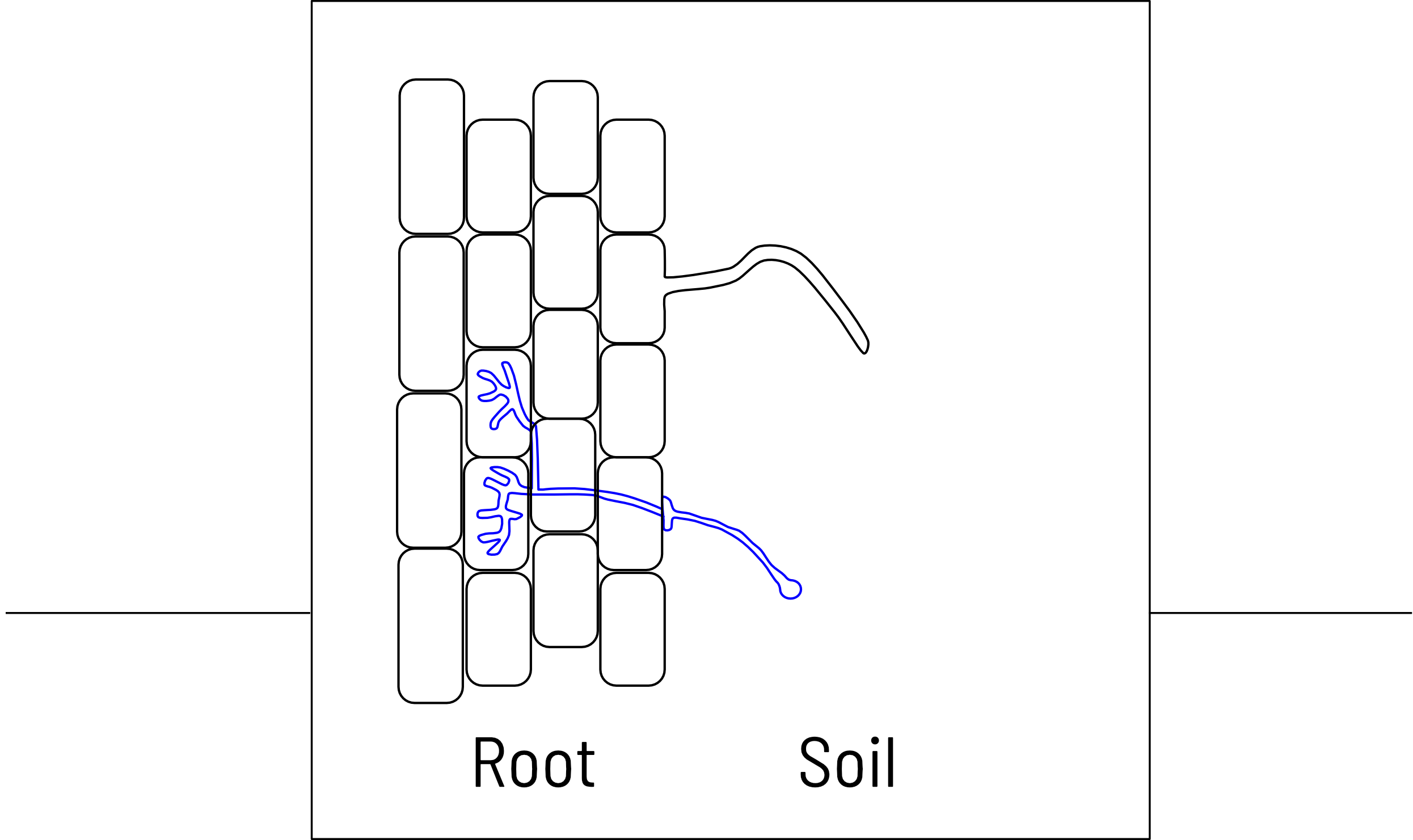
Parasitic plants need another plant to survive. They latch with a special organ, named an haustorium, to their host plants, wriggling themselves inside towards the veins. There they siphon away the nutrients they need.

Seeds of parasitic plants germinate often only when they perceive specific signals that indicate that there is a host plant nearby. When the germinating plants also receive a subsequent signal, a so called haustorium inducing factor, then they start developing a haustorium.

But not much is known about the development of haustorium. After perceiving a haustorium inducing factor the cell sends out a calcium signal. This eventually results in a local auxin maximum stimulating the development of the haustorium. But what is causing the auxin biosynthesis genes to be activated is unknown.

Now do Japanese researchers show in “Neofunctionalized RGF pathways drive haustorial organogenesis in parasitic plants” that peptide growth factors have a role in this.

Signal molecules

In the Japanese study the researchers studied the development of haustoria in the parasitic plant: Phtheirospermum japonicum. They where especially interested in signal molecules that are activated after perception of the haustorium inducing factor. Specifically, they looked at possible peptide signal molecules.

In this way the researchers discovered that the root meristem growth factor RGF1, 2, and 5 were more abundant after exposure to the haustorium inducing factor. Subsequently the researchers analysed if RGF1, 2, or 5 could activate auxin biosynthesis. This turned out to be the case.

Now the researchers wanted to know where in the rood RGF1, 2, or 5 are located. Through coupling to a fluorescent protein, the researchers could see where the RGFs accumulated. Under normal conditions RGF1 is present everywhere in the root, RGF2 was absent, and RGF5 was located only in specific cells. After exposure to a haustorium inducing factor RGF2 and 5 accumulated in large quantities in the developing haustorium. The location of RGF1 did not change.

Perceiving RGFs

The next question the researchers had was which receptors are perceiving these RGFs, as RGFs by themselves can not directly activate genes. Therefore, the researchers studied RGF-receptors. First, they looked at which RGF-receptors were active in haustoria. This turned out to be RGF-receptor1, 2, 3, 4, and 5. Subsequently the researchers analysed which of those RGF-receptors bind RGF2 and RGF5. For RGF2 this was RGF-receptor1, 3, and 4. While RGF5 only bound to RGF-receptor3 and 4.

The ultimate test to confirm that the discovered RGFs and their corresponding RGF-receptors are indeed involved in the regulation of the development of haustoria is showing that in absence of these growth factors and receptors no haustoria develop. Therefore, the researchers developed plants without one of these growth factors or receptors. To the disappointment of the researchers this did not give a clear answer. In absence of one of these RGFs or RGF-receptors the parasitic plant could still develop haustoria. Although at a slightly lower frequency.

This suggests that the different RGFs and RGF-receptors can take over each other’s function. To confirm to the researchers tried to develop parasitic plants in which lacked multiple RGFs or RGF-receptors. Unfortunately, these did not survive. So further research is needed.

Literature

Maxwell R. Fishman et al., (2025) Neofunctionalized RGF pathways drive haustorial organogenesis in parasitic plants.Sci. Adv.11, eadw3965. https://www.science.org/doi/10.1126/sciadv.adw3965


Thanks for reading.
If you like what you read, support me with on of the following actions

Follow me on LinkedIn or BlueSky
Share it with a friend or co-worker
Singing up to my newsletter so my next blog lands directly in your inbox

Parasiterende orgaan formatie


Parasiterende orgaan formatie

Parasiterende planten hebben een andere plant nodig om te overleven. Met een speciaal orgaan, genaamd het haustorium, hechten ze aan de gastheerplant en wurmen zich een weg naar binnen, naar de vaatbundels. Daar tappen ze de voedingstoffen af die ze nodig hebben.

Zaden van parasiterende planten ontkiemen vaak alleen bij ontvangst van signalen die aangeven dat er een gastheerplant aanwezig is. Ontvangen de ontkiemde parasiterende planten vervolgens een volgend signaal, een zo genaamd haustorium induceer factor, dan gaan ze een haustorium ontwikkelen.

Maar over de regulatie van haustorium ontwikkeling is nog niet zo veel bekend. Na waarneming van een haustorium induceer factor verstuurt de cel een calcium signaaltje. Dit leidt er uiteindelijk toe dat er een lokaal auxine maximum ontstaat wat de vorming van een haustorium stimuleert. Maar wat ervoor zorgt dat de auxine biosynthese genen aangaan is nog onbekend.

Nu laten Japanse onderzoekers zien in “Neofunctionalized RGF pathways drive haustorial organogenesis in parasitic plants” dat peptide groeifactoren hier een rol in hebben.

Signaal moleculen

In de Japanse studie bestudeerde de onderzoekers de ontwikkeling van haustoria van de parasiterende plant: Phtheirospermum japonicum. Ze waren vooral geïnteresseerd in signaal moleculen die na waarneming van een haustorium induceer factor actief werden. Vooral keken de onderzoekers naar mogelijke peptide signaal moleculen.

Zo ontdekte de onderzoekers dat de wortel meristeem groeifactor RGF1, 2, en 5 meer aanwezig waren na blootstelling van de wortels aan een haustorium induceer factor. Vervolgens gingen de onderzoekers na of RGF1, 2, of 5 de auxine biosynthese kon activeren. Dit bleek het geval te zijn.

Nu wilde de onderzoekers weten waar in de wortel RGF1, 2, en 5 zich bevinden. Door de een fluorescent eiwit te koppelen aan RGF1, 2, en 5 konden de onderzoekers na gaan waar deze zich ophoopte. Onder normale omstandigheden bleek RGF1 zich overal in de wortel aanwezig, RGF2 juist niet, en RFG5 alleen in specifieke cellen. Dit veranderde na blootstelling aan een haustorium indiceer factor, daarna hoopte RGF2 en RGF5 zich in grote getalen op in de ontwikkelende haustorium. De locatie van RGF1 veranderde niet.

RGFs waarnemen

De volgende vraag die de onderzoekers hadden was welke receptoren nemen de RGFs waar, omdat RGFs op zichzelf geen genen kunnen activeren. Daarvoor bestudeerde de onderzoekers RGF-receptoren. Als eerste gingen de onderzoekers na welke RGF-receptoren actief waren in de ontwikkelende haustorium. Dit bleken RGF-receptor1, 2, 3, 4, en 5 te zijn. Vervolgens bestudeerde de onderzoekers welke van die RGF-receptoren RGF2 of RGF5 binden. Voor RGF2 bleek dit RGF-receptor1, 3, en 4 te zijn, terwijl RGF5 alleen aan RGF-receptor3, en 4 bond.

De ultieme test om te bevestigen of de ontdekte RGFs en de bijbehorende receptoren inderdaad de ontwikkeling van haustoria regelen is of haustoria ook in afwezigheid van deze groeifactoren en receptoren zich kunnen ontwikkelen. Hiervoor ontwikkelde de onderzoekers planten waarin een van deze groeifactoren of receptoren afwezig was. Tot de teleurstelling van de onderzoekers gaf dit geen duidelijk antwoord. In afwezigheid van een van de RGFs of RGF-receptor lukt het nog steeds of haustoria te ontwikkelen. Al gebeurde dit iets minder vaak.

Dit suggereert dat de verschillende RGFs en RGF-receptoren elkaars functie kunnen overnemen. Om dit te bewijzen probeerde de onderzoekers parasiterende planten te ontwikkelen waar meerdere RGFs of RGF-receptoren afwezig waren. Die overleefde het helaas niet. Meer onderzoek is dus nodig om dit verder op te helderen.

Literatuur

Maxwell R. Fishman et al., (2025) Neofunctionalized RGF pathways drive haustorial organogenesis in parasitic plants.Sci. Adv.11, eadw3965. https://www.science.org/doi/10.1126/sciadv.adw3965


Bedankt voor het lezen
Vond je het interessant, overweeg dan een van de volgende acties

Volg me op LinkedIn of BlueSky
Stuur het door aan een vriend of collega

Abonnneer je op m’n nieuwsletter zodat de volgende automatisch in je inbox verschijnt.

Potential for regeneration


Potential for regeneration

Some cells have the potential to be come everything they wish, they are totipotent. Like the zygote, the cell that forms after the melting of the female and male gametes. But from plants it is known that more cell types can develop into totipotent cells. You can see this possibility for example in leaf cells. Under specific circumstances they can develop embryo’s.

For a long time, the question was if all plant cells could develop into embryo’s or that only specific cells can do that. Now a group of international researchers show in their paper “Time-resolved reprogramming of single somatic cells into totipotent states during plant regeneration” that only specific cells have this possibility to develop into embryo’s.

For the study the researchers used an embryo inducing line. These plants develop embryos on their leaves after the researchers activate the gene LEC2. To find out if there are specific cells from which those embryos develop, the researchers zoomed in on the leaf cells. This enabled them to see that the cells from which embryo’s developed, first divided anticlinal. This was followed by one of the daughter cells dividing asymmetrically in three. These three cell subsequently developed into an embryo.

Local auxin maximum

The first question the researchers wanted to answer was how. Which genes and hormones are directing this? To answer that question the researchers studied the presence of the hormone auxin. Using an auxin receptor coupled to a fluorescent protein, the researchers observed that in the cells just before they start to develop towards an embryo, there is a large amount of auxin present.

The researchers also checked what the gen YUC, involved in auxin production, does. After activation of LEC2, this gene for auxin biosynthesis became active. But only in cells that subsequently developed into embryos. The researchers also looked at what happens in plants that do not have any YUC. There the researchers observed that even when LEC2 was active, no embryos developed.

Subsequently the researchers asked which cells have the possibility of becoming totipotent after LEC2 activation. The researchers had noticed that when LEC2 was active and embryos developed at the same time less stomata developed. Therefore, the researchers followed what happens to cells from which stomata develop. For this the researchers coupled marker genes for each of the sub-stages of stomata development to a fluorescent protein.

Stomata  

In this way the researchers noticed that upon activation of LEC2 leaf cells who where early in the development towards stomata reacted to LEC2 and switched to developing embryos. While leaf cells that were further in the process of stomata development just continued on that path.

The researchers also studied what happens when there is more of the early stomata development marker gene SPCH. This, so observed the researchers, resulted not only in more embryo development on the leaves after activation of LEC2, but also on the stem and roots. But only if those plants could produce also auxin to create local auxin gradients.

Lastly the researchers looked at hoe LEC2 together with SPCH is regulating the auxin production. They discovered that LEC2 and SPCH work together. In this LEC2 recognises the activation region of the auxin biosynthesis genes but needs SPCH to actually activate those. In the absence of SPCH LEC2 is even dimming the activity of the auxin biosynthesis genes.

In this way the researchers show that only plant cells that already have a certain amount of totipotency can be tricked into developing embryos. In young leaves this are the cells that are destined to become stomata.

Literature

Tang et al., Time-resolved reprogramming of single somatic cells into totipotent states during plant regeneration, Cell (2025), https://doi.org/10.1016/j.cell.2025.08.031


Thanks for reading.
If you like what you read, support me with on of the following actions

Follow me on LinkedIn or BlueSky
Share it with a friend or co-worker
Singing up to my newsletter so my next blog lands directly in your inbox

Potentie tot regeneratie


Potentie tot regeneratie

Sommige cellen hebben de mogelijkheid om alles te worden wat ze willen, ze zijn totipotent. Zoals de zygote de cel die ontstaat door het samensmelten van de mannelijke en vrouwelijke gameten. Maar van planten is bekend dat veel meer celsoorten zich tot een totipotente cel kunnen ontwikkelen. Dit is te zien in de mogelijkheden van bijvoorbeeld cellen in bladeren. Daaruit kunnen onder specifieke omstandigheden embryo’s ontwikkelen.

Voor lange tijd was de vraag of uit alle cellen embryo’s kunnen ontwikkelen, of alleen uit specifieke cellen. Nu laten een groep van internationale onderzoekers in het artikel “Time-resolved reprogramming of single somatic cells into totipotent states during plant regeneration” zien dat alleen specifieke cellen de mogelijkheid hebben om zich tot embryo’s te ontwikkelen.

Voor het onderzoek maakte de onderzoekers gebruik van een embryo-inducerende lijnen. Deze planten ontwikkelen embryo’s nadat onderzoekers het gen LEC2 inschakelen. Om erachter te komen of er specifieke cellen zijn waaruit de embryo’s zich ontwikkelen zoomde de onderzoekers in op de bladcellen. Zo zagen de onderzoekers dat de cellen die zich uiteindelijk tot embryo’s ontwikkelde, zich eerst in de breedte deelde, vervolgens deelde een van de twee dochtercellen zich asymmetrisch in drieën. Deze drie cellen ontwikkelen zich vervolgens tot een embryo.

Lokaal auxine maximum

De eerste vraag die de onderzoekers beantwoord wilde hebben was hoe. Welke genen en hormonen sturen dit? Om dit te beantwoorden bestudeerde de onderzoekers de aanwezigheid van het hormoon auxine. Door een auxine receptor gekoppeld aan een fluorescent eiwit te gebruiken, zagen de onderzoekers dat alleen in cellen net voordat die zich tot embryo’s ontwikkelen, er een grotere hoeveelheid auxine aanwezig is.

Ook gingen de onderzoekers na of gen betrokken bij de biosynthese van auxine (YUC) actief was. Activatie van LEC2 zorgde dat het gen voor auxine biosynthese alleen actief werd in cellen die zich vervolgens tot embryo’s ontwikkelde. Ook bestudeerde de onderzoekers wat er gebeurde in planten zonder YUC. Daar zagen ze dat ook al was LEC2 actief, er geen embryo’s groeide.

Vervolgens was de vraag welke cellen hebben de mogelijkheid om door LEC2 activatie totipotent te worden. Het was de onderzoekers opgevallen dat wanneer LEC2 actief was en er embryo’s ontwikkelde, er zich minder huidmondjes ontwikkeld. Daarom volgde de onderzoekers wat er gebeurde na LEC2 activatie met de cellen waaruit zich huidmondjes zich ontwikkelde. Hiervoor koppelde de onderzoekers marker genen voor elk van de tussen fasen aan een fluorescent eiwit.

Huidmondjes

Zo zagen de onderzoeker dat na activatie van LEC2 bladcellen die vroeg in de ontwikkeling tot huidmondje zaten op LEC2 reageerde en zich vervolgens ontwikkelde tot embryo’s. Terwijl bladcellen die al verder in de ontwikkeling tot huidmondjes zaten zich gewoon door ontwikkelde tot huidmondjes.

Ook bestudeerde de onderzoekers wat er gebeurde wanneer er meer van de vroege huidmondjes marker gen SPCH aanwezig was. Dit, zo zagen de onderzoekers zorgde ervoor dat zich niet allen embryo’s ontwikkelde op de bladeren, maar ook op de stengel en wortels. Maar alleen wanneer de plant daar ook auxine kon aanmaken, om een lokaal auxine gradiënt te creëren.

Als laatste gingen de onderzoekers na hoe LEC2 samen met SPCH de auxine biosynthese reguleert. Hierbij ontdekte dat LEC2 en SPCH samenwerken. Hierbij herkent LEC2 de activatie regio van auxine biosynthese genen, maar heeft het SPCH nodig om die ook daadwerkelijk te activeren. Is SPCH afwezig, dan dimt LEC2 zelfs de activiteit van auxine biosynthese genen.

Zo laten de onderzoekers zien dat alleen plantencellen die al een bepaalde mate van totipotentie hebben zich laten verleiden om tot embryo’s te ontwikkelen. In jonge bladeren zijn dit de cellen die voorbestemd zijn om huidmondjes te worden.

Literatuur

Tang et al., Time-resolved reprogramming of single somatic cells into totipotent states during plant regeneration, Cell (2025), https://doi.org/10.1016/j.cell.2025.08.031


Bedankt voor het lezen
Vond je het interessant, overweeg dan een van de volgende acties

Volg me op LinkedIn of BlueSky
Stuur het door aan een vriend of collega

Abonnneer je op m’n nieuwsletter zodat de volgende automatisch in je inbox verschijnt.