What makes a binding domain


What makes a binding domain

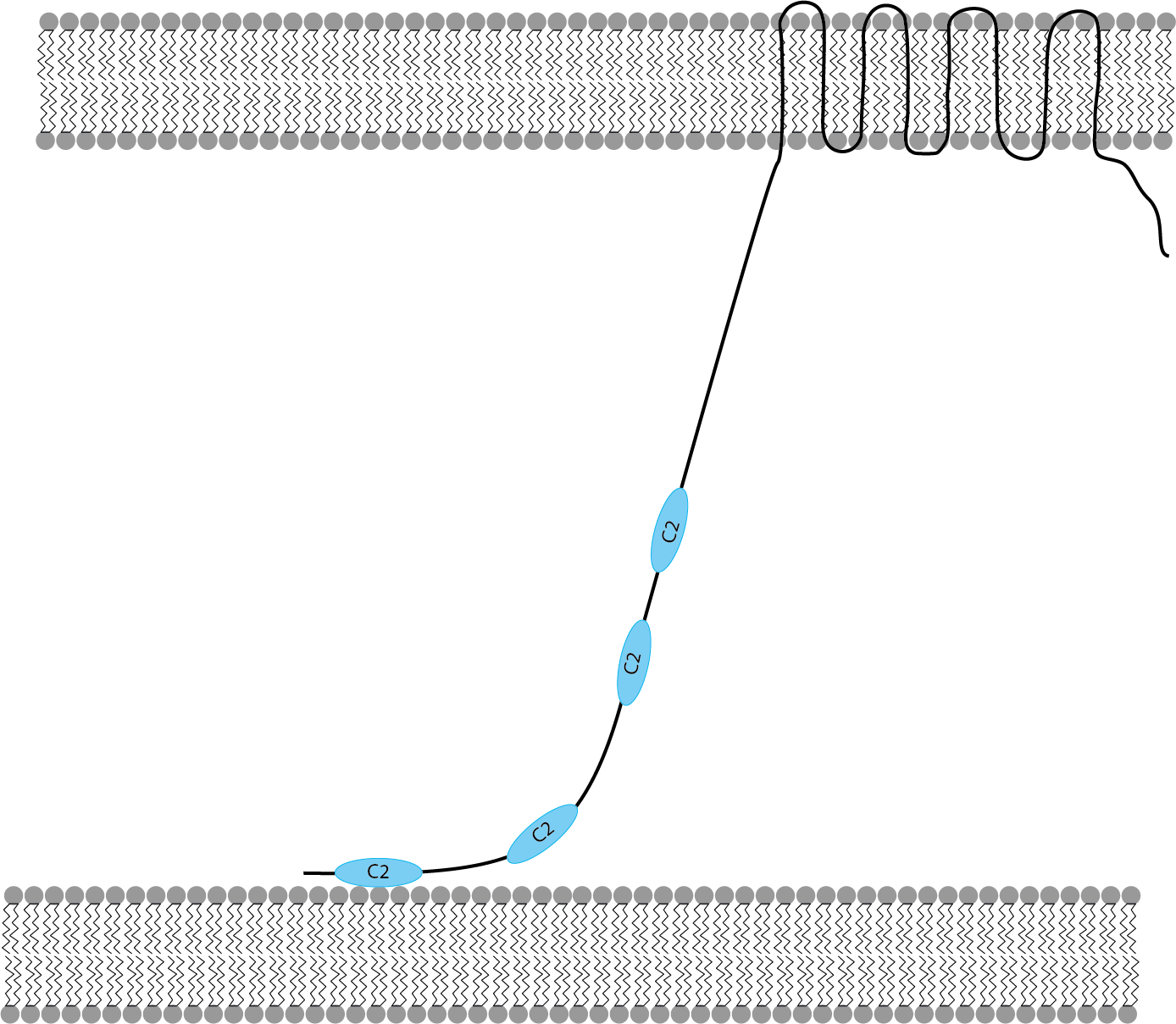
One of the projects that I am busy with at the moment is writing a review about phosphoinositide binding domains. Preparing for that I have been reading old reviews on the same topic. One thing that I noticed was that some domains which have shown to bind phosphoinositides, like the CRAL-TRIO domains, were not included. The logical explaination for that will be of course that they were identified later than said review, but this was not the case. I decided, therefor, to do a bit of research into what makes a binding domain.

While the definition of a domain is clear such as shown on the InterPro website where the define a domain as follow:

“Domains are distinct functional, structural or sequence units that may exist in a variety of biological contexts.”

What defines a binding domain is harder to find, but Wikipedia tells us:

“A binding domain is a protein domain which binds to a specific atom or molecule, such as calcium or DNA. […] Binding domains are essential for the function of many proteins. They are essential because they help splice, assemble, and translate proteins.”

Under this definition we could classify all domains that have proven to function in the binding of molecule such as a lipid or a protein to be called a lipid- or protein-binding domain. This is clear and simple. So why then are some domains for which specific binding capacity is confirmed not classified as such in the literature. Two things appear to be playing a role here.

The first is that sometimes the function of the domain is less clear-cut than some articles tend to make out it to be. So there might be some ambiguity. For example, the TUBBY domain binds highly specific to bi-phosphorylated phosphoinositides. However, as part of its function, once released from its phospholipid it can translocate to the nucleus using the same domain for binding to DNA promoting transcription. Therefore, it could be classified as both a phospholipid- and a DNA-binding domain.

The second is that the domain binding behaviour is different compared to that of other binding domains binding the same type of molecule. For example, for the CRAL-TRIO domain, it is described that it binds phospholipid not only by its head group but by engulfing the whole phospholipid, head and tail. In this respect, it stands out from other phospholipid binding proteins which, in general bind the phospholipid by its head only.

So, in the end, the decision to name a domain as say a phospholipid-binding domain appears to be partly arbitrary. Depending on the level of evidence in favour and against it, but also on how easily its function fits within that single definition. Do I now know if I should include a description of the CRAL-TRIO domains in my review? No I don’t. Will I include them? I probably will as part of their definition is that they bind small lipophilic molecules. Meaning, that when investigating lipid protein interactions you should keep them in mind as potential interactors. This is what readers of the review will want to know. Therefor I should tell them all that is known about it.

Vesicle-vacuole fusion – A little less of a mystery


Vesicle-vacuole fusion – A little less of a mystery

Recently, Yvon Jaillais attended me in his tweet of the latest paper of the Raikhel/Hicks lab. I have been wanting to write a review of this paper as it shows some nice research. However, reading the article I also quickly came to realise, that in order to avoid losing you, I needed some visualisation of all the different interactions that take place. So it took me a bit longer than I hoped for to prepare this highlight. As the figures illustrating the different interactions are mine, all mistakes in the interpretation are mine as well. The paper elegantly describe a set of experiments they have done to decipher a bit more of the PVC/vacuole fusion process. Making use of a small synthetic molecule Endosidin 17 (ES17) that disrupts the fusion process, they found how VPS35-RAB7 interaction plays a role in this process.

In plant cells vacuoles have big role in keeping the cell working as it does.Vacuoles are not only used as storage compartments for lots of molecules. They also have a role in recycling cellular components like receptors. And can act as compartments were cellular molecules are be broken down. As you can see vacuoles fulfil a diverse set of functions. To avoid of it all ending in chaos trafficking towards the vacuole needs to be tightly regulated. Vesicles are emerging from different parts of the cell, and those that are destined to fuse with the vacuole membrane (tonoplast) are called prevacuolar compartments, PVCs for short. Currently our understanding in how this fusion to happens is by the following steps:

  • The RAB-GTPase RAB5 binds to the PVCs and is subsequently activated (RAB5*).
  • PVCs-RAB5* recruits the CORVET (VPS8, VPS3, VPS16, VPS18, and VPS33) complex, followed by interaction with VAMP727 and SYP22 of the tonoplast SNARE complex to initiate fusion with the tonoplast.

Additionally

  • Recruitment of Mon1-Ccz1 triggers exchange of RAB5 for RAB7 and subsequently activates RAB7 (RAB7*).
  • RAB7*-PVC recruits the retromer (VPS35), VPS29, VPS26) complex and interacts with the HOPS (VSP41, VSP39, VPS33, VPS18 and VPS16) tethering complex which subsequent leads to fusion withe the tonoplast, through interaction of VPS33 with SPY22 from the tonoplast SNARE complex

Whereby the exchange of RAB5 for RAB7 and subsequent recruitment of the retromer and HOPS complexes can be seen as one of those additional safety checks to avoid unwanted fusions.

PVC-vacuole fusion 1
Our current understanding of PVC-vacuole fusion

In the recent publication of Raikhel/Hicks lab they investigated this last step in more detail. Using PIN2-GFP as a way to visualise vesicle trafficking they found that ES17 treatment affected PIN2-GFP transport to the vacuole. Using reporter lines for different steps of vesicle transport, they narrowed ES17 effect down to PVCs fusion with the tonoplast.

Following this, they went on to investigate to which protein ES17 was binding and which interaction it disrupted. This led to the finding that ES17 binds to VPS35 at the location where it normally binds RABG3f (a RAB7 protein). The disruption of the interaction between VPSP35 and RABG3f had as result that VPS35 could not anchor itself to the PVC membrane to assemble the retromer complex. Moreover, VPS35-RABG3f interaction was shown to be a requirement for the recruitment of VPS39 and VPS33 of the HOPS complex to the PVC. Which in itself is needed for the fusion of the PVC with the vacuole.

PVC-vacuole fusion 2
PVC-Vacuole fusion with filled in details of the discussed paper

The authors conclude that the interaction of RAB7 with VPS35 and the retromer complex functions as a kind of checkpoint, after which VSP35 presumably releases RRABG3f, so RABG3f becomes available for the recruitment of the HOPS complex and subsequent fusion with the tonoplast.

Literature

Rodriguez-Furlan et al., Interaction between VPS35 and RABG3f is necessary as a checkpoint to control fusion of late compartments with the vacuole. PNAS, 2019,

Context is everything


Context is everything

I have been reading a ton of articles lately, in order to get a better grip on phosphoinositide-binding proteins. Slowly, this made me realise that how we present our findings is important. Of course a well written article is easier to read than one that is not. But the order we present our findings in and the context we place them in also has a big impact. It not only determines the chance of them to be picked up by others, but also how they will place your results in context with what they already know and what they will learn in the future. I will give you an example of something that I have been coming across while reading about phosphoinositides.
In one paper (1) it starts with

“PIPs (phosphoinositides) greatly influence growth, development, and responses to external cues.”

Followed by

“PIPs are also known to regulate themselves numerous cellular processes, including membrane trafficking, ion channel activity, cytoskeleton dynamics, cell polarity, vacuolar morphology and chloroplast division.”

Reading this you would be thinking wow this molecule is involved in lots of processes, how can it do this?
In another paper (2), actually in the same journal and issue, has actually the opposite approach, here they start with

“both groups of molecules (small GTPases and phosphoinositides) coordinate trafficking between different membranes as specific mechanisms are in place to ensure their correct spatiotemporal distribution.”

They then explain the general mechanisms before going on with

“Finally, to illustrate the aforementioned concepts, we use the examples of vacuolar sorting and polarized trafficking, notably in the context of tip growth.”

Reading this you might think, this is an interesting mechanism, where else does it apply to?
As the examples above illustrate, the way you present the data affects how it is thought about. What is becoming clear is that phosphoinositides are part of membrane trafficking machinery and that membrane trafficking affects a lot of developmental processes. By placing the membrane trafficking machinery first and the affected processes second Noack and Jailais are helping the reader to make the connection that all the mentioned processes are affected by a single mechanism that through fine tuning can influence them all.
Although, placing the affected processes first and the how by the membrane trafficking machinery second would not prevent you from making this connection, it is not helping either. You will need to understand how phosphoinositides affect each of these processes in turn before you are able to see that in each process they are more or less doing the same thing. Asking the reader to do much more work before coming to the same conclusion.
While it is understandable in the process of discovery that initially things are presented as if they are not interconnected. However, once the connection is made it is important that this is not lost in subsequent reporting of new findings. So in the case of the role of phosphoinositides we can say something like this “phosphoinositides are involved in membrane trafficking and regulation of membrane proteins. Through this they affect not only plant growth, but also development and responses to external cues.”

References

1. de Campos and Schaaf, The regulation of cell polarity by lipid transfer porteis of the SEC14 family, Current Biology, 2017, 40:158-168
2. Noack and Jaillais, Precision targeting by phosphoinositides: How PIs direct endomembrane trafficking in plants, current Opinion in Plant Biology, 2017, 40:22-23

How plants avoid salt


How plants avoid salt

Plants don’t like high salt levels in their cells. They do therefore everything they can to avoid this. As mentioned in earlier posts plants have a number of strategies for this. However, the best strategy is not taking up to much salt in the first place. Being sensitive to salts, plants can sense differences in salt concentrations. When the roots grow in a patch of soil high in salt their growth is slower than it would have been when growing in soil low in salt. However, when growing in soil low in salt, but coming across a patch of soil high in salt the roots will adjust their direction of growth to avoid the high salt soil. To understand how plants do this you will need to how root growth is regulated.

root auxin flow normal
Reverse fountain auxin flow in a root grown under normal conditions

Simply said, root growth is a product of increasing the number of cells and increase of the length of the cells. Root growth is regulated by distribution of the plant hormone auxin. Auxin is made in the shoot and transported via the phloem to the tip of the root. Here it creates an auxin maximum, which inhibits cell differentiation and elongation, but creates a zone with fast dividing cells. From the tip of the root auxin is actively transported up again creating a reverse fountain effect. With auxin concentration decreasing the further away the cells are from the tip. This enables the plant to control the differentiation and elongation of the cells, the cells just above the zone with fast dividing cells still have a slightly lower level of auxin, resulting in inhibition of division and elongation, but promotion of differentiation. In the cells above that the auxin level is lower again, now enabling elongation, the lengthening of the cells. When the root is simply growing down the reverse fountain of the auxin gradient is symmetric.

root auxin flow salt gradient
Reverse fountain auxin flow in a root growing in a salt gradient

But when a salt gradient is sensed, the auxin gradient becomes asymmetrically, with higher levels of auxin at the side with less salt. This higher auxin level inhibits elongation in the cells away from the salt. While at the same time at the side with more salt the auxin levels are lower. These lower auxin levels promote elongation in the cells near the salt. This asymmetric lengthening of the cells bends the root away from the salt. Enabling the root to grow away from the salt.

root beding salt gradient
Root growing away from high salt levels

Active auxin transport is needed for the creation of the reverse auxin fountain. It was found that transporters called PIN are responsible for auxin transport. Under normal circumstances they are mainly located in the plasma membrane at the top of the cell. When exposed to salt the cell use endocytosis to remove these PIN proteins from the plasma membrane, reducing the auxin flow. So when the exposure to salt is asymmetrically, there will be more PIN proteins in the plasma membranes of cells on the side with less salt than in the plasma membrane of the cells on the side with more salt. Resulting in the asymmetric auxin gradient, and subsequent bending of the root.

References

Galvan-Ampudia et. al., Halotropism is a response of plant roots to avoid a saline environment, Current Biology, 2013, 23: 2044-2050

Abas et al., Intracellular trafficking and proteolysis of the Arabidopsis auxin-efflux facilitator PIN2 are involved in root gravitropism, Nature Cell Biology, 2006, 8: 249-256

Brunoud et al., A novel sensor to map auxin response and distribution at high spatio-temporal resolution, Nature, 2012, 482: 103-106

Band et al., Root gravitropism is regulated by a transient lateral auxin gradient controlled by a tipping-point mechanism, PNAS, 2012, 109: 4668-467