CO2 regulates stomata opening


CO2 regulates stomata opening

Stomata, the pores on the underside of the leaf, let CO2 in for photosynthesis and water vapour out. Regulation of these openings is of great importance for the plant. Are these pores open too long during hot dry days, then a plant loses lots of water, but when they are close there can be no photosynthesis and the plant starves. Now researchers show that by an increasing of CO2 in the atmosphere plants are not using this to fix more energy but for saving water.

The closing and opening of the stomata goes accompanied by an increase or decrease of the internal pressure in the guard cells of stomata. the cell regulates this by pumping potassium ions in or out of the cell. This in turn activates the process of osmosis, the movement of water from one side of the membrane to the other side in order to keep the ion concentration – in this case potassium ions – on both sides of the membrane as equal as possible. Extra water in the guard cells of the stomata allows them to swell and close the pore. Less water has the opposite effect.

Less potassium pumps

Through adding a fluorescent tag to the potassium pump KAT1 the researchers noticed that by an increase of CO2 there are less KAT1 potassium pumps in the membrane. To check if the cell actively removes those potassium pumps the researchers used a locally deactivated the tag. Under normal CO2 levels no new signal appeared, but at higher CO2 levels a new signal was quickly observed. The only way a new signal could appear that quickly was by placing a new potassium pump with an active tag into that area.

For removing and placing proteins in the cell membrane the cell uses a system called SNARE. The proteins of the SNARE system are able to create a small membrane bubble using the membrane around the protein that they want to remove, in such a way that the to removed protein is part of that newly formed membrane bubble. The SNARE system can also intergrade those membrane bubbles into the cell membrane.

SYP121 is one of the proteins of the SNARE-system that recognises proteins that the cell wants to remove from the membrane. The researchers checked if SYP121 also recognises KAT1 by an increase of CO2. In plants without SYP121 the potassium pump KAT1 remained in the cell membrane by an increase of CO2.

Efficient water use

The researchers expected that by an increase of CO2 more SYP121 would bind to KAT1. But when they checked this, they found that the opposite occurred. This suggest that not the binding of SYP121 to KAT1, but the not binding of SYP121 to KAT1 signals that KAT1 needs to be removed by the SNARE-system.

Lastly the researchers analysed the effect that of the removal of the potassium pump has on plants growing under increase CO2 levels. Plants without SYP121, who can’t adjust the numbers of their potassium pumps in response to CO2, appeared to grow less at higher CO2 levels. These plants also closed and opened their stomata slower than plants with SYP121. In addition, plants without SYP121 had a lower water use efficiency.

Al together this study shows that the stomata of plants react to the amount of CO2 in the air. Not as much as to increase the amount of CO2 that they take up, but to limit the amount of water that evaporates.

Literature

Yu, Z., Waghmare, S., Farami, S., Blatt, M.R., and Karnik, R. (2026). CO2-sensitive K+ channel traffic affects stomata and whole-plant water use. J. Integr. Plant Biol.00: 1–18. https://onlinelibrary.wiley.com/doi/10.1111/jipb.70269


Thanks for reading.
If you like what you read, support me with on of the following actions

Follow me on LinkedIn or BlueSky
Share it with a friend or co-worker
Singing up to my newsletter so my next blog lands directly in your inbox

CO2 reguleert de opening van huidmondjes


CO2 reguleert de opening van huidmondjes

Huidmondjes, de poriën aan de onderkant van het blad, laten CO2 voor fotosynthese naar binnen en waterdamp naar buiten. Regulering van de opening van deze poriën is dus van levensbelang voor de plant. Staan ze te lang open tijdens een warme droge dag dan verliest een plant veel water, maar als de poriën dicht zijn kan er geen fotosynthese plaatsvinden, en verhongerd de plant. Nu laten onderzoekers zien dat bij een toename aan CO2 in de atmosfeer planten dit niet aanpakken om meer energie vast te leggen, maar om water te besparen.

Het sluiten en openen van de huidmondjes gaat gepaard met een toename of afname van de interne druk in de huidmondjescellen. Dit regelen de cellen door kaliumionen naar binnen of naar buiten te pompen. Dit zorgt ervoor dat osmose, het verplaatsen van water van een kant van het membraan naar de andere kant van het membraan om de ion concentratie – in dit geval kaliumionen – aan beide kanten zo gelijk mogelijk te houden, in gang komt. Extra water in de huidmondjescellen zorgt ervoor dat deze zich uitzetten en daardoor sluiten. Minder water heeft het tegenover gestelde effect.

Minder kaliumpompen

Door aan de kaliumpompen een fluorescerend vlaggetje te hangen zagen de onderzoekers dat bij een toename aan CO2 er minder KAT1 kaliumpompen in het membraan aanwezig waren. Om te kijken of de cel de kaliumpompen actief verwijderde schakelde de onderzoekers het vlaggetje lokaal uit. Onder normale CO2 omstandigheden kwam er geen nieuw signaal, maar bij een toename aan CO2 kwam er al snel weer een nieuw signaal. De enige manier waarop er zo snel een nieuw signaal kan komen is door er een kaliumpomp met een actief vlaggetje in te zetten.

Het weghalen en weer terugplaatsen van eiwitten in het membraan doet de cel met behulp van het SNARE-systeem. Hierbij vormen de eiwitten van het SNARE-systeem een blaasje van het membraan rondom het eiwit dat ze willen weghalen. Ook kan het SNARE -systeem membraanblaasjes in het celmembraan plaatsen.

SYP121 is een van de eiwitten van het SNARE-systeem dat de eiwitten herkent die de cel uit het membraan wil weghalen. De onderzoekers gingen na of SYP121 ook KAT1 herkent bij een toename van CO2. In planten zonder SYP121 bleef de kaliumpomp KAT1 ook bij een toename van CO2 in het celmembraan zitten.

Efficiënt watergebruik

De onderzoekers verwachte dat dit kwam omdat bij een toename van CO2 er meer SYP121 aan KAT1 bindt. Maar toen ze dat checkte bleek het tegenovergestelde het geval te zijn. Dit suggereert dat niet het binden van SYP121 aan KAT1, maar het niet binden van SYP121 aan KAT1, KAT1 markeert voor het weghalen door het SNARE-systeem.

Als laatste gingen de onderzoekers na wat voor effect dit weghalen van de kaliumpomp bij toename van CO2 heeft op de huidmondjes en de groei van de plant. Planten zonder SYP121, die dus niet hun kaliumpompen konden aanpassen aan de hoeveelheid CO2, bleken minder goed te groeien wanneer er meer CO2 aanwezig was. Ook sloten en opende deze planten hun huidmondjes langzamer dan planten waar SYP121 wel aanwezig was. Daarnaast gingen SYP121 loze planten minder efficiënt met water om.

Al met al laat deze studie dus zien dat de huidmondjes in planten reageren op de hoeveelheid CO2 in de lucht. Niet zo zeer om de hoeveelheid CO2 die ze opnemen te verhogen, maar om de hoeveelheid water dat ze uitstoten te verminderen.

Literatuur

Yu, Z., Waghmare, S., Farami, S., Blatt, M.R., and Karnik, R. (2026). CO2-sensitive K+ channel traffic affects stomata and whole-plant water use. J. Integr. Plant Biol.00: 1–18. https://onlinelibrary.wiley.com/doi/10.1111/jipb.70269


Bedankt voor het lezen
Vond je het interessant, overweeg dan een van de volgende acties

Volg me op LinkedIn of BlueSky
Stuur het door aan een vriend of collega

Abonnneer je op m’n nieuwsletter zodat de volgende automatisch in je inbox verschijnt.

Sounding the alarm


Sounding the alarm

Early detection of a pathogen attack can prevent the spread of an infection. Scientists know how plants detect pathogens and contain infections locally. But how this early detection is then translated into warning for the rest of the plant is less well understood. Part of the problem was the absence of a reporter that can capture the dynamics of this process. Now British researchers show in Nature Plants using a reporter system that the alarm passes through the plant much faster than first thought.

After a pathogen infects one leaf, the immune system sends a warning signal to the rest of the plant, telling it to prepare for an attack. As such if after that initial infection a second pathogen tries to infect the plant it is met by the plant’s immune system in full riot gear. No pathogen comes through. How fast and through which signalling molecules the alarm is activated is unknown, although scientist suggested that the plant hormone salicylic acid might be involved, as it is with other infection responses.

Unsuspected alarm raiser

Now to investigate this properly required a reporter for the alarm signal. This the researchers of the study found in a gene they now call JISS. By coupling the promoter region – the part that tells the gene when to be active – to luciferase – a gene that encodes for a protein that lights up – the researchers could see when and where JISS was activated. Using this reporter the team showed that within three to five hours after infection JISS was activated throughout the plant. This was before there where even visible signs that the plant was infected. That was surprisingly fast.

Next came trying to find out where in the process of sounding the alarm the activation of JISS fitted. So, the researchers checked if the alarm was still sounded in a bunch of known defence response mutants. In all of the mutants tested the warning signal was still able to travel through the plant. Suggesting that the alarm by which JISS is activated comes before the defence response is raised.

Subsequently the researchers wanted to find out the signalling molecule that sets off this early pathogen alarm. Surprisingly they found that this was not the plant hormone salicylic acid or a signalling molecule related to salicylic acid. Instead, the plant hormone jasmonic acid activated the alarm. They confirmed this using mutans that could not make or detect jasmonic acid. In these mutants the JISS-reporter signal did not travel, and the plant was not prepared for a second infection.

Calcium required for alarm

To find the alarm signal the researchers next checked if they could detect any electrical signal. By connecting electrodes to different leaves of the plant the researchers noticed that after infection, first there is a clear electrical signal in the infected leaf, followed by one in its neighbours and later a weak signal in a more distant leaf. This electrical signal was absent in mutans that could not make or detect jasmonic acid.

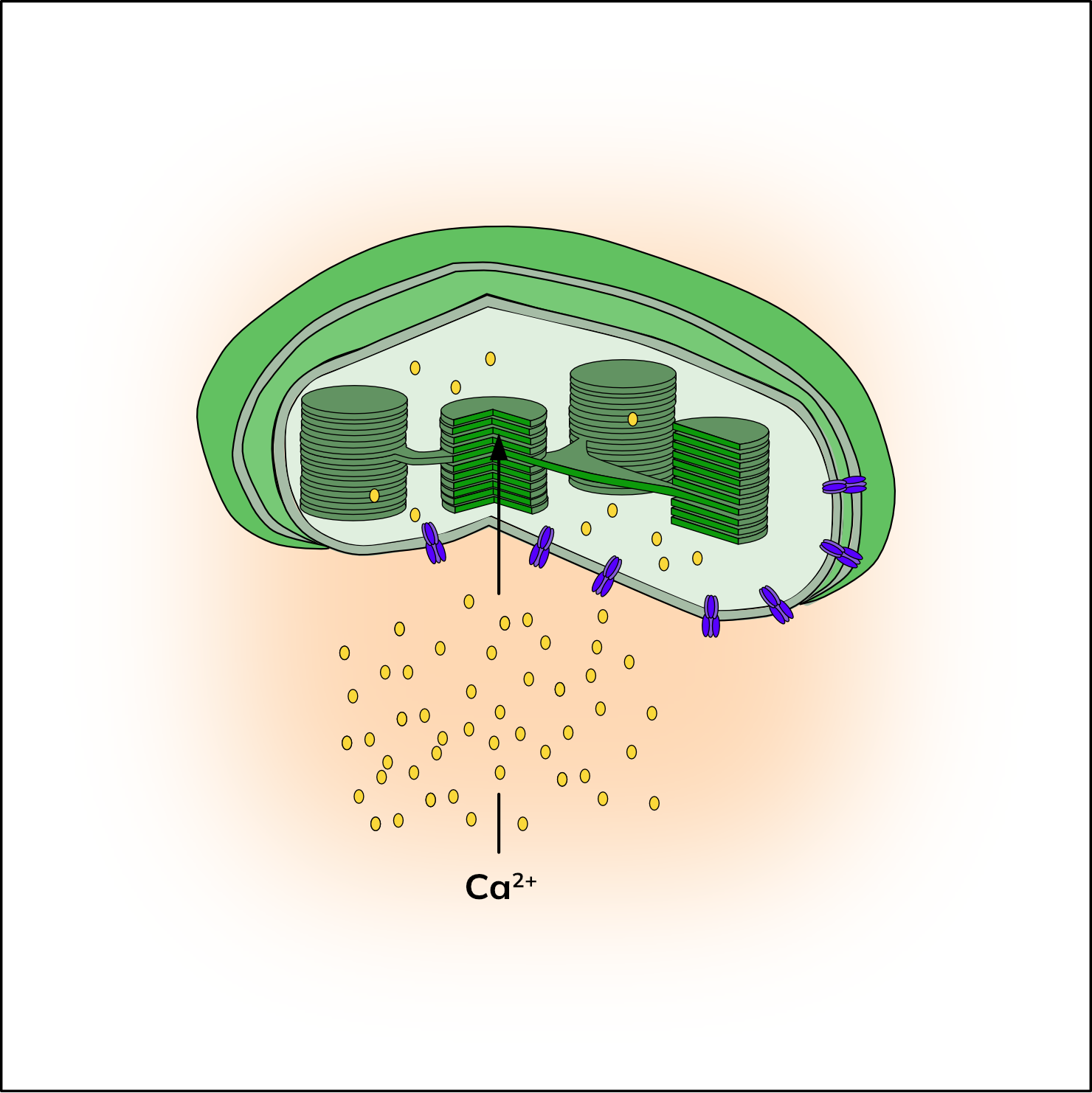
The researchers suspected that the source of this electric signal might be calcium. They tested this with blocking calcium signals and checking the JISS-reporter signal. After blocking calcium, no reporter signal was detected. Indicating that calcium is required for spreading the warning signal.

So, within hours after detecting an infection, before outward signs are even seen, the whole plant is protected via this jasmonic acid sounded and calcium facilitated alarm signal.

Literature

Gaikwad, T., Breen, S., Breeze, E. et al. Rapid local and systemic jasmonate signalling drives the initiation and establishment of plant systemic immunity. Nat. Plants 12, 152–163 (2026). https://doi.org/10.1038/s41477-025-02178-4


Thanks for reading.
If you like what you read, support me with on of the following actions

Follow me on LinkedIn or BlueSky
Share it with a friend or co-worker
Singing up to my newsletter so my next blog lands directly in your inbox

Alarm slaan


Alarm slaan

Vroege detectie van ziektekiemen kan verspreiding naar de rest van de plant voorkomen. Wetenschappers weten hoe een plant ziektekiemen herkent en begrenzen infecties lokaal. Maar begrijpen minder goed hoe planten deze detectie vertalen in een waarschuwing voor de rest van de plant. Deel van het probleem is het gebrek aan een goede reporter die de dynamiek van dit proces kan laten zien. Nu laten Britse onderzoekers in Nature Plants met behulp van een reporter zien dat het alarmsignaal zich veel sneller door de plant verspreid dan eerst werd gedacht.

Nadat een ziektekiem een blad infecteert stuurt het immuunsysteem een alarmsignaal naar de rest van de plant met de boodschap: bereid voor op een aanval. Met als gevolg dat elk daaropvolgende ziektekiem verwelkomd wordt door het immuunsysteem van de plant in volle aanvalsuitrusting. Geen ziektekiem die daar doorheen komt. Maar hoe snel en via welke signaal moleculen de plant dit alarm activeert is onbekend, al suggereren onderzoekers dat, net zoals bij andere infectie reacties het plant hormoon salicylzuur betrokken kan zijn.

Onverwachte alarmist

Nu, om dit goed te onderzoeken is een goede reporter voor het alarmsignaal nodig. Deze vonden de onderzoekers van de studie in een gen dat ze nu JISS noemen. Door de promoter regio – het gedeelte dat vertelt wanneer een gen actief moet zijn – te koppelen aan luciferase – een gen dat codeert voor een eiwit dat oplicht – konden de onderzoekers zien wanneer en waar JISS was geactiveerd. De onderzoekers toonde met behulp van deze reporter aan dat binnen drie tot vijf uur na een infectie JISS geactiveerd was in de gehele plant. Dit was verrassend snel. 

Vervolgens kwam het uitzoeken van waar in het proces van alarm slaan de activatie van JISS past. Daarom gingen de onderzoekers na of het alarm nog steeds afging in een aantal bekende verdedigingsmutanten. In alle geteste mutanten ging het alarmsignaal nog steeds af. Wat suggereert dat het alarm dat JISS activeert vroeg voor de andere, al bekende, verdediging komt.

Hierna gingen de onderzoekers na welk signaal molecuul dit vroege ziektekiem alarm slaat. Verrassend genoeg bleek dit niet het plant hormoon salicylzuur of een molecuul gerelateerd aan salicylzuur te zijn. Tegen de verwachtingen in activeert het plant hormoon jasmijnzuur het alarm. Om dit te bevestigen gebruikte de onderzoekers mutanten die geen jasmijnzuur konden maken of detecteren. In deze mutanten reisde het JISS-reporter signaal niet, en was de plant niet voorbereid op een volgende infectie.

Calcium nodig voor alarm

Om het alarmsignaal te vinden gingen de onderzoekers na ze een elektrisch signaal konden waarnemen. Door electroden aan verschillende bladeren vast te maken zagen de onderzoekers na infectie een duidelijk elektrisch signaal in het geïnfecteerde blad, gevolgd door een signaal in de aangrenzende bladeren en vervolgens een zwak signaal in een meer afgelegen blad. Dit elektrisch signaal was afwezig in mutanten die geen jasmijnzuur konden maken of detecteren.

De onderzoekers verwachte dat de bron van dit elektrisch signaal calcium was. Dit testte ze door calcium te blokkeren. In planten waar calcium geblokkeerd was reisde na een infectie het JISS-signaal niet door de plant. Wat aangeeft dat calcium nodig is voor het verspreiden van het alarm.

Dus, binnen uren na de detectie van ziektekiemen, nog voordat uitwendige kenmerken zichtbaar zijn, is de hele plant beschermt via dit door jasmijnzuur geactiveerde en door calcium gefaciliteerde alarmsignaal.

Literatuur

Gaikwad, T., Breen, S., Breeze, E. et al. Rapid local and systemic jasmonate signalling drives the initiation and establishment of plant systemic immunity. Nat. Plants12, 152–163 (2026). https://doi.org/10.1038/s41477-025-02178-4


Bedankt voor het lezen
Vond je het interessant, overweeg dan een van de volgende acties

Volg me op LinkedIn of BlueSky
Stuur het door aan een vriend of collega

Abonnneer je op m’n nieuwsletter zodat de volgende automatisch in je inbox verschijnt.